100×worker · job analysis
Will AI Replace Restaurant Managers?

Restaurant management is a hands-on job built on people, timing, and taste. Ask whether AI is coming for that job, and the honest answer is: not directly. According to Microsoft Research's 2025 analysis of 200,000 real Copilot conversations, generative AI is directly applicable to just 9.1% of the tasks that make up a food service manager's job (Microsoft Research, Working with AI, 2025). That is one of the lowest scores of any occupation studied, well below translators (49%) and even below nurses (12%).
That does not mean nothing changes. Anthropic's Economic Index shows that when people in service roles do use tools like Claude or ChatGPT, most of that use is augmentation: drafting a reply, summarizing reviews, checking a calculation, rather than full automation of a shift. Eurostat reports that 32.7% of the EU population aged 16 to 74 used generative AI in the three months before being surveyed in 2025, so guests, staff, and suppliers already expect these tools to show up somewhere in daily operations.
This article sorts the restaurant manager role into four buckets: tasks to eliminate, automate, delegate, and keep. The goal is to show, task by task, what actually changes in 2025, not to speculate about job loss.
A restaurant manager runs the floor, kitchen, staff, menu, budget, and guest experience of a food and drink business.
The task split: what AI takes over and what stays yours
Not every task in a restaurant manager's job faces AI the same way. Some tasks disappear because software already handles them better than a person with a notepad. Others run automatically in the background, with AI flagging only exceptions. Some are best done as a draft-and-approve workflow, where AI writes a first version and you make the final call. A few stay entirely human, because they depend on judgment, legal responsibility, or being physically present in the room. The buckets below sort the ESCO-listed skills for this occupation accordingly.
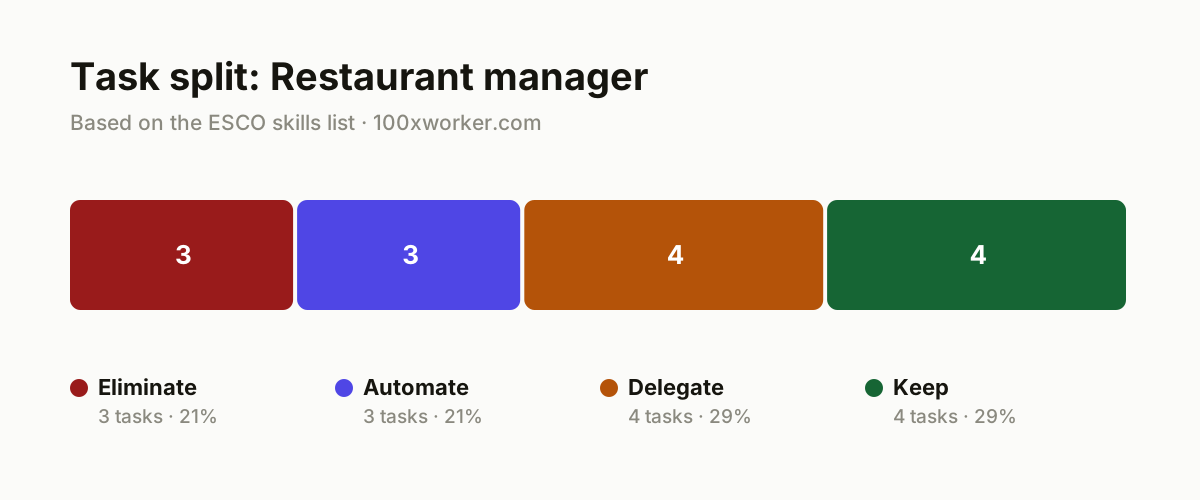
| Task | Bucket | Why |
|---|---|---|
| Translating menus by hand into French, English, or German for tourists | eliminate | AI translates instantly and consistently, so you no longer need an external translation agency or manual rewriting. |
| Building weekly revenue and margin reports by hand in Excel | eliminate | Your POS system and AI generate the report automatically from data you already collect. |
| Keeping paper mise-en-place checklists per shift and signing them off | eliminate | Digital checklist apps with automatic reminders make the paper trail unnecessary. |
| Ordering stock from suppliers based on inventory levels | automate | An AI agent spots shortages and places the order, and you only get a notification when something looks off. |
| Tracking stock rotation, use-by dates, and HACCP logging | automate | The system logs this automatically and flags risks, so paper registers are no longer needed. |
| Collecting and clustering Google and TripAdvisor reviews by theme | automate | An agent turns hundreds of reviews into patterns, and you read the summary instead of every review. |
| Menu planning and recipe development | delegate | AI proposes a first draft based on food cost, season, and allergens; you and the chef approve or adjust it. |
| Setting menu prices | delegate | AI calculates margin and food cost per dish and suggests prices; you make the commercial call. |
| Building staff rosters and shift schedules | delegate | AI drafts a first schedule based on expected demand; you adjust it for people and context. |
| Answering complaints by email or review | delegate | AI writes a first draft reply; you adjust tone and detail before sending. |
| Leading staff during service | keep | Pace, mood, and motivation on a packed Saturday night are yours to manage. (Your edge: Reading what your team needs in that exact moment.) |
| Managing the guest experience at the table (allergies, VIP guests, incidents) | keep | The conversation with an unhappy guest happens at the table, not through a chatbot. (Your edge: Improvising and finding the right tone in the moment.) |
| Hiring staff | keep | AI can screen resumes, but the interview and final decision stay human work. (Your edge: Judging whether someone fits the team and the business.) |
| Supervising food safety and hygiene during service | keep | Legal responsibility sits with you; AI is a tool, not an inspector. (Your edge: Legal liability and on-the-spot judgment calls.) |
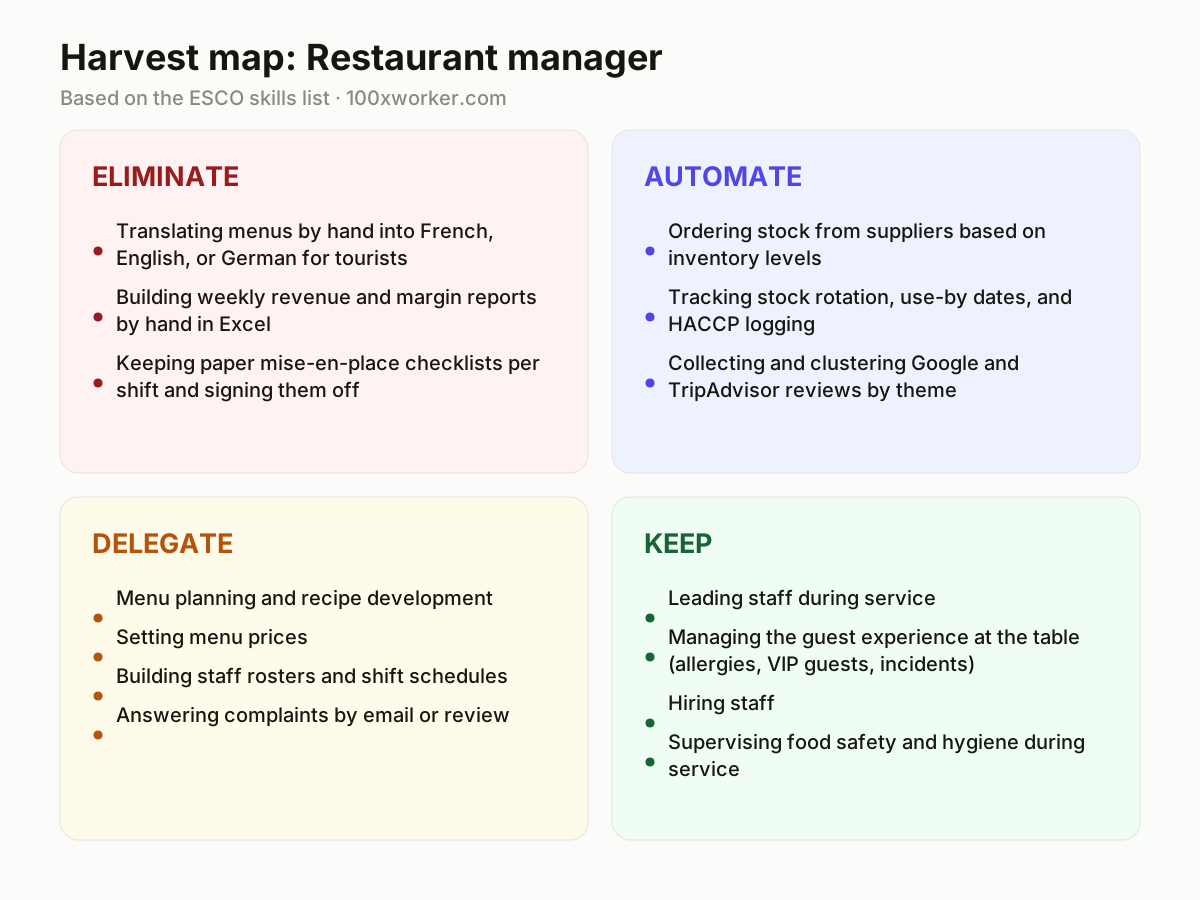
Which restaurant manager tasks can AI take over?
AI already handles a chunk of the paperwork side of restaurant management. Menu translation, weekly revenue reports, and paper checklists can disappear entirely once you connect your POS and a checklist app. Ordering stock, tracking use-by dates, and clustering online reviews can run mostly in the background, with an AI agent flagging only exceptions. Menu planning, pricing, rosters, and complaint replies work best as a draft-and-approve workflow, where AI writes the first version and you make the final call. Microsoft Research puts generative AI's direct applicability to this occupation at 9.1%, low compared to office roles, but that share still covers real hours of admin each week.
Will AI replace restaurant managers?
No single tool replaces a restaurant manager, because the job depends on being physically present, reading a room, and taking legal responsibility for food safety and staff. Microsoft Research's applicability score for food service managers is 9.1%, one of the lowest of any occupation it studied, far below roles like translation at 49%. What changes is the shape of the job: less time on spreadsheets, rosters, and review summaries, more time actually managing people and guests. The tasks shrink or disappear; the title and the core responsibilities stay.
How do you become the AI go-to person on your team as a restaurant manager?
Becoming the AI go-to person in your restaurant does not require technical skill, it requires being first to test tools on real tasks. Try an AI tool on a slow Tuesday: draft next week's roster, summarize last month's reviews, or write a complaint reply, then check the result against what you know about your business. Share what works with your shift leads and head chef, and write down which prompts actually save time. When staff see you using AI openly to solve boring admin instead of hiding it, they ask you first, which puts you in charge of how it gets used in your restaurant.
What can you actually do this month as a restaurant manager?
Pick one recurring task, ordering, rostering, or complaint replies, and test an AI tool on it for two weeks. Compare the AI draft against what you would have written or ordered yourself, and note where it gets food cost, timing, or tone wrong. Ask your POS or inventory provider whether they already offer an AI ordering or reporting feature you are not using yet. Do not roll out anything new during a packed weekend; test it on a quiet midweek shift first, where a mistake costs you little.
Across occupations, few jobs disappear task by task; most change shape as generative AI takes over specific activities within them.
Microsoft Research, Working with AI (2025)
Become the AI person on your team
Run one admin task through AI for two weeks
Pick rostering, ordering, or review summaries and let AI produce the first draft every time. Compare it to your own version daily and keep notes on where it needs correction.
Document your prompts
Save the prompts that produced a usable roster draft or a good complaint reply in a shared note. Your shift leads can reuse them without starting from scratch each time.
Bring the data to your team meeting
Show your kitchen and floor staff what AI got right and wrong on a real order or schedule. This builds trust faster than a policy memo about AI use.
Want this for your actual task list?
The free scan on the homepage builds your personal task map in 30 seconds, based on your role and industry.
Run the free task scanTools for this work
| Tool | For which tasks | The sober take |
|---|---|---|
| Point-of-sale reporting features (e.g. built into Toast, Lightspeed, Square) | Automates weekly revenue and margin reports (eliminate) | Most modern POS systems already generate these reports; check your existing contract before buying new software. |
| General-purpose chat assistants (ChatGPT, Claude, Copilot) | Draft menu translations, complaint replies, and first-pass rosters (delegate/eliminate) | Useful for first drafts, but always check food cost figures and tone before sending anything to a guest. |
| Inventory and ordering platforms with AI reordering (e.g. MarketMan, Apicbase) | Automates stock ordering and use-by date tracking (automate) | These tools need clean starting inventory data or the automated orders will be wrong. |
| Review aggregation and summary features (e.g. Google Business Profile insights) | Clusters and summarizes Google and TripAdvisor reviews (automate) | Good for spotting patterns across hundreds of reviews, but read the actual one-star reviews yourself too. |
Prompts to try today
Draft a weekly staff roster
Summarize recent reviews by theme
Draft a reply to a complaint
Related jobs
Frequently asked questions
Will AI take over restaurant manager jobs entirely?
No. Microsoft Research's 2025 analysis found generative AI directly applicable to only 9.1% of the tasks in food service management, one of the lowest scores of any occupation studied. The job depends on physical presence, food safety responsibility, and managing people in real time, none of which AI can do on its own. What changes is the admin load around the job, not the job itself.
Which AI tools should a restaurant manager actually start with?
Start with what you already have. Most POS systems generate revenue and margin reports automatically. Add a general chat assistant like ChatGPT, Claude, or Copilot for drafting rosters, translations, and complaint replies. Only look at specialized inventory-AI platforms once you have clean stock data, since those tools order badly when the underlying data is messy.
Is customer demand for AI in restaurants actually there?
Guests already use AI themselves. Eurostat reports that 32.7% of the EU population aged 16 to 74 used generative AI in the past three months in 2025. That does not mean guests want AI running their table experience, but it does mean the tools you use behind the scenes, like translation or review summaries, match habits your guests already have.
Does AI replace the need to hire and train staff?
No. AI can screen resumes faster and draft a first interview script, but the interview itself and the decision to hire stay human. ESCO lists hiring staff and training employees as core skills for this occupation, and both depend on judging fit with a real team, something a screening tool cannot do.
Sources
- Microsoft Research, Working with AI: Measuring the Applicability of Generative AI to Occupations (2025)
- Anthropic Economic Index
- Eurostat, isoc_ai_iaiu (generative AI use, 2025)
- ESCO, European Commission occupation and skills taxonomy
Hendrik De Winne, author of Becoming AI-Savvy, founder of VibeLab. Helps teams redesign their work with AI.
This article was drafted with AI assistance from public data sources and editorially reviewed.