100×worker · job analysis
Will AI Replace Chefs, and What Should You Do About It?
Chefs run kitchens through taste, timing, and pressure, not through paperwork. That matters when you look at how AI actually shows up in kitchen work. Microsoft Research analyzed 200,000 real conversations with its Copilot assistant and scored how applicable generative AI is across occupations. For chefs and head cooks, the applicability score lands at 15.1%, near the bottom of the list, far below translators (49%) and only slightly above nurses (12%).
That does not mean nothing changes. The European Commission's ESCO taxonomy lists 3,039 occupations with detailed skill breakdowns, and it shows a chef's job already splits into distinct tasks: applying cooking techniques, planning menus, managing kitchen staff, complying with food safety law, controlling costs. AI reaches some of those tasks (cost control, documentation, scheduling) and leaves others (technique, leadership on the line, taste) untouched. Anthropic's Economic Index, which classifies large volumes of Claude conversations against standardized task lists, shows the same pattern across many occupations: AI use splits between tasks it automates outright and tasks where it only augments a person's judgment.
A chef is a culinary leader who combines cooking technique, menu design, and team leadership into one dining experience.
The task split: what AI takes over and what stays yours
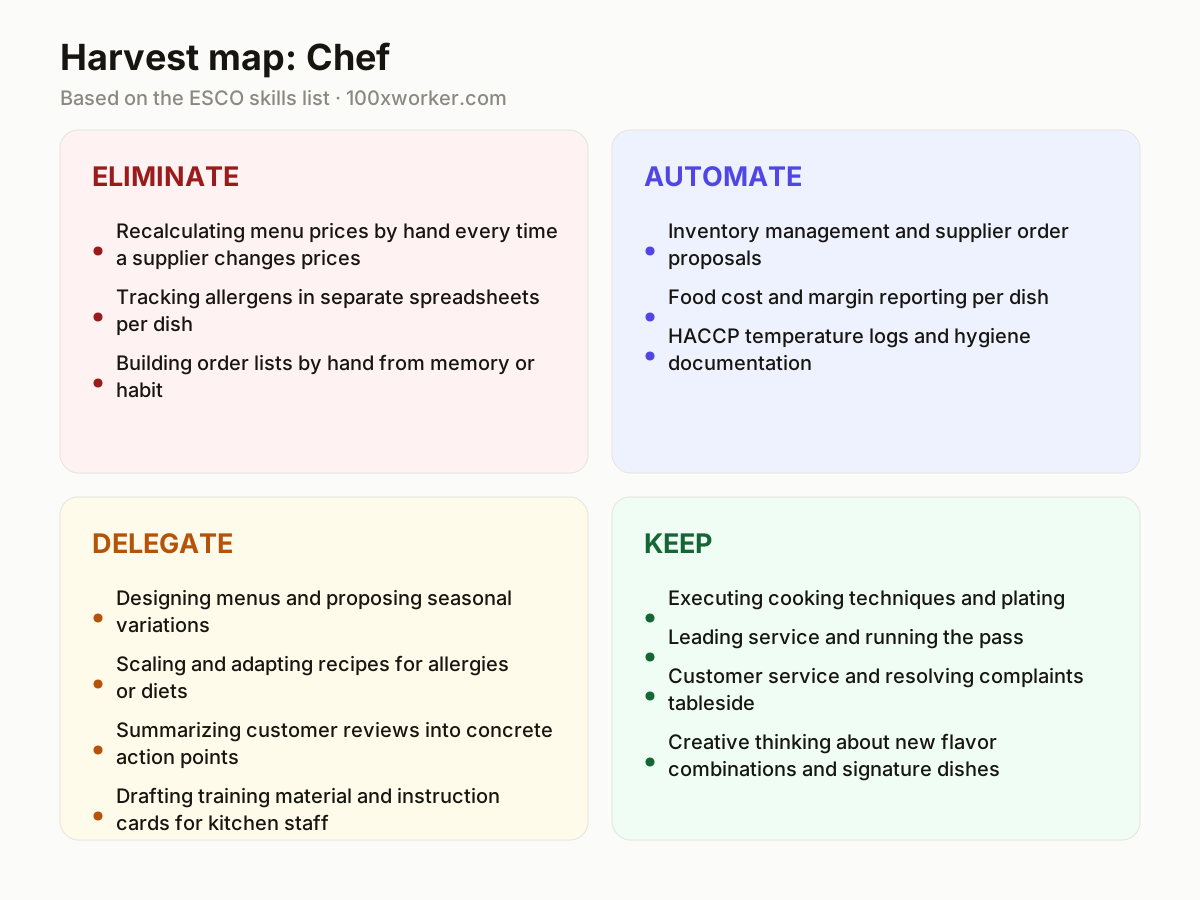
Instead of asking whether AI will take over 'the chef job', it helps to break the role into its actual tasks, the way ESCO does. Some tasks disappear because software now does them without anyone asking (eliminate). Some run in the background once you set them up (automate). Some get a first draft from AI that you then correct with your own judgment (delegate). And some stay entirely with the person standing at the pass, because they depend on taste, timing, and pressure that no model can feel (keep).
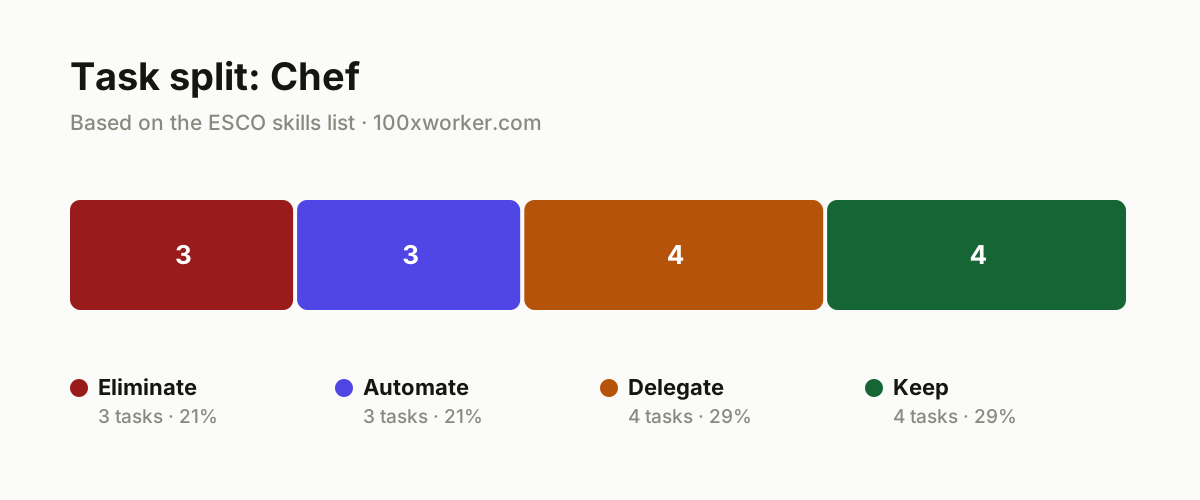
| Task | Bucket | Why |
|---|---|---|
| Recalculating menu prices by hand every time a supplier changes prices | eliminate | Software links purchase prices to the menu automatically, so this arithmetic no longer needs manual work. |
| Tracking allergens in separate spreadsheets per dish | eliminate | One connected system shows allergens automatically per ingredient, so standalone spreadsheets become redundant. |
| Building order lists by hand from memory or habit | eliminate | Inventory software generates order lists directly from usage data, making memory-based ordering unnecessary work. |
| Inventory management and supplier order proposals | automate | An agent reads usage and shelf-life data and drafts an order ready to send, no manual counting needed. |
| Food cost and margin reporting per dish | automate | POS data and purchase prices feed automatically into a margin overview without the chef doing the math. |
| HACCP temperature logs and hygiene documentation | automate | Sensors and digital checklists fill themselves in, staying ready for inspection at any time. |
| Designing menus and proposing seasonal variations | delegate | AI generates options based on season, food cost, and trends; the chef picks and refines the actual taste. |
| Scaling and adapting recipes for allergies or diets | delegate | AI recalculates quantities and suggests substitutions; the chef tastes the result and decides on the finishing touch. |
| Summarizing customer reviews into concrete action points | delegate | AI reads reviews and surfaces patterns; the chef decides what actually changes in the kitchen. |
| Drafting training material and instruction cards for kitchen staff | delegate | AI writes a first draft of the procedure; the chef checks it against how the kitchen really works. |
| Executing cooking techniques and plating | keep | Taste, texture, and timing require physical skill that no model takes over. (Your edge: Tasting, feeling, and adjusting the dish in the moment.) |
| Leading service and running the pass | keep | Managing pace and pressure during a full house stays a live, human task. (Your edge: Making decisions under time pressure, in real time.) |
| Customer service and resolving complaints tableside | keep | An unhappy guest wants a person across the table, not a chatbot. (Your edge: Empathy and improvisation delivered on the spot.) |
| Creative thinking about new flavor combinations and signature dishes | keep | A chef's personal style is exactly what sets a restaurant apart from its neighbors. (Your edge: Personal taste and years of experience as the source.) |
What tasks does AI take over from chefs?
AI mainly takes over the paperwork layer of the job: recalculating menu prices when supplier costs change, tracking allergens across dishes, building order lists, generating margin reports, and filling in HACCP logs. These are tasks with clear inputs and clear outputs, which is exactly what current AI systems handle well. ESCO's task breakdown for chefs (planning menus, controlling expenditure, complying with food safety law) shows these administrative tasks sitting alongside hands-on cooking work. AI moves into the administrative side first, leaving cooking technique, plating, and service leadership to the person running the kitchen.
Will AI replace chefs?
No. Microsoft Research's applicability score for chefs and head cooks sits at 15.1%, one of the lowest among the occupations it studied, well below translators (49%) and close to nurses (12%). That low score reflects how much of the job depends on physical execution: applying heat correctly, plating under time pressure, tasting and adjusting on the spot. Software can plan a menu draft or track a food cost margin, but it cannot taste a sauce or run a pass during a Saturday night rush. The job's task list shifts, with fewer hours on spreadsheets, but the core role stays intact.
How do you become the kitchen's AI person?
Start by owning the automate bucket for your kitchen: set up inventory software that reads usage data, connect food cost reporting to your POS system, and digitize your HACCP checklists. Then build a small library of prompts for the delegate bucket (menu drafts, recipe scaling, review summaries) that other chefs on your team can reuse. Train junior staff on which drafts need a real check by a human, and which can go out with light editing. Being the AI person in a kitchen means knowing exactly where a draft ends and your judgment begins.
What can you do this month to start using AI in the kitchen?
Pick one task from the automate bucket, most kitchens start with food cost reporting or inventory ordering, and set it up properly this month. Pick one task from the delegate bucket, like drafting a seasonal menu variation, and run it through an AI tool to see what a first draft looks like before you correct it. Do not touch anything in the keep bucket: technique, service leadership, and tableside service stay exactly as they are. Small, task-level changes add up faster than trying to overhaul the whole kitchen at once.
Chefs and head cooks show one of the lowest generative AI applicability scores of all occupations studied, at 15.1%, far below roles like translation at 49%.
Microsoft Research, Working with AI: Measuring the Applicability of Generative AI to Occupations (2025)
Become the AI person on your team
Digitize the paper trail first
Move HACCP logs, allergen lists, and order sheets into connected software before touching anything creative. This removes the eliminate-bucket busywork and frees hours for the parts of the job that actually need a chef.
Build a menu draft workflow
Feed an AI tool your seasonal ingredients, target food cost, and past bestsellers to get three menu draft options. Taste-test and refine from there instead of starting from a blank page each season.
Turn reviews into a weekly action list
Run customer reviews through an AI summarizer weekly and bring the top three recurring points to a team briefing. This keeps kitchen decisions grounded in actual guest feedback instead of gut feeling alone.
Want this for your actual task list?
The free scan on the homepage builds your personal task map in 30 seconds, based on your role and industry.
Run the free task scanTools for this work
| Tool | For which tasks | The sober take |
|---|---|---|
| Apicbase | Food cost and margin reporting, recipe scaling | Connects recipe costing to purchase prices, cutting manual foodcost spreadsheets. |
| MarketMan | Inventory management and supplier order proposals | Tracks stock and usage to draft supplier orders automatically. |
| SafetyCulture (iAuditor) | HACCP temperature logs and hygiene documentation | Digitizes checklists so logs are ready for inspection without paper forms. |
| ChatGPT or Claude | Menu drafts, recipe adaptation, training material, review summaries | Useful for first drafts; a chef still has to taste-test and correct the output. |
Prompts to try today
Seasonal menu draft
Recipe scaling and dietary adaptation
Review summary for the kitchen team
Related jobs
Frequently asked questions
Is a chef's job at high risk from AI?
No. Microsoft Research's 2025 study of real Copilot usage scored chefs and head cooks at 15.1% AI applicability, one of the lowest scores among the occupations it measured. High-risk occupations in that same study, like translation, score around 49%. The physical, sensory nature of cooking (taste, texture, timing, plating under pressure) limits how much of the job current AI systems can reach, regardless of how good they get at generating text or images.
Which part of a chef's job changes fastest because of AI?
The administrative layer changes fastest: food cost reporting, inventory ordering, allergen tracking, and HACCP documentation. These tasks have structured inputs (prices, usage data, ingredient lists) and structured outputs (reports, order lists, logs), which is exactly what current AI and connected software handle well. Cooking technique, service leadership, and tableside customer interaction change far more slowly, because they depend on physical skill and real-time human judgment.
Do chefs need to learn to code or use complex AI tools?
No. Most of the useful AI tools for a kitchen are inventory, costing, and checklist software that already exists, plus general-purpose chat tools like ChatGPT or Claude for drafting menus or training documents. Using them well means knowing which draft needs your taste and judgment applied, and which report can go out as generated. That is a workflow skill, not a coding skill.
How does AI affect kitchen staffing and training?
AI can draft training material and instruction cards for new kitchen staff, giving a head chef a starting point instead of writing every procedure from scratch. It cannot replace hands-on demonstration, tasting sessions, or the mentoring that happens during a shift. Kitchens that use AI for the paperwork side of onboarding tend to free up more of the head chef's time for actual hands-on training on the line.
Sources
- Microsoft Research, Working with AI: Measuring the Applicability of Generative AI to Occupations (2025)
- Anthropic Economic Index
- Eurostat, isoc_ai_iaiu (generative AI use in the EU, 2025)
- ESCO, European Commission occupation and skills taxonomy
Hendrik De Winne, author of Becoming AI-Savvy, founder of VibeLab. Helps teams redesign their work with AI.
This article was drafted with AI assistance from public data sources and editorially reviewed.