100×worker · job analysis
Will AI Replace Event Managers?
Event managers plan and run conferences, banquets, and corporate events, and much of that work happens on-site, under time pressure, with people who change their minds. That is exactly the kind of work generative AI struggles to touch. Microsoft Research analyzed 200,000 real conversations with its Copilot assistant and scored occupations by how much of their daily work AI tools can plausibly handle. Meeting, convention, and event planners came in at 14.7%, far below roles like translation (49%) and closer to nursing (12%).
That does not mean nothing changes. The same research, alongside Anthropic's Economic Index (which classifies millions of Claude conversations against the O*NET task list), shows a consistent pattern across occupations: AI removes repetitive documentation and reporting fastest, and only slowly touches judgment calls made with other people in the room. For event managers, that means paperwork, inventory counts, and compliance logs move to software first. Live coordination on the day of the event does not.
This article breaks the job into four buckets: tasks to eliminate outright, tasks to automate with software, tasks to delegate to AI with your review, and tasks to keep because they depend on being physically present and trusted by clients and staff.
An event manager plans, books, and coordinates venues, staff, and services for conferences, banquets, and corporate events.
The task split: what AI takes over and what stays yours
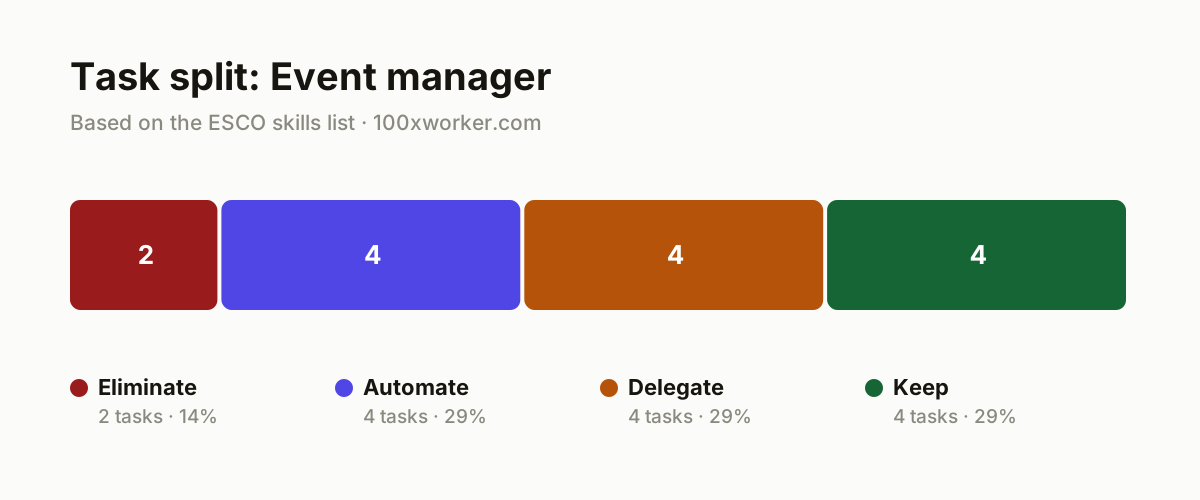
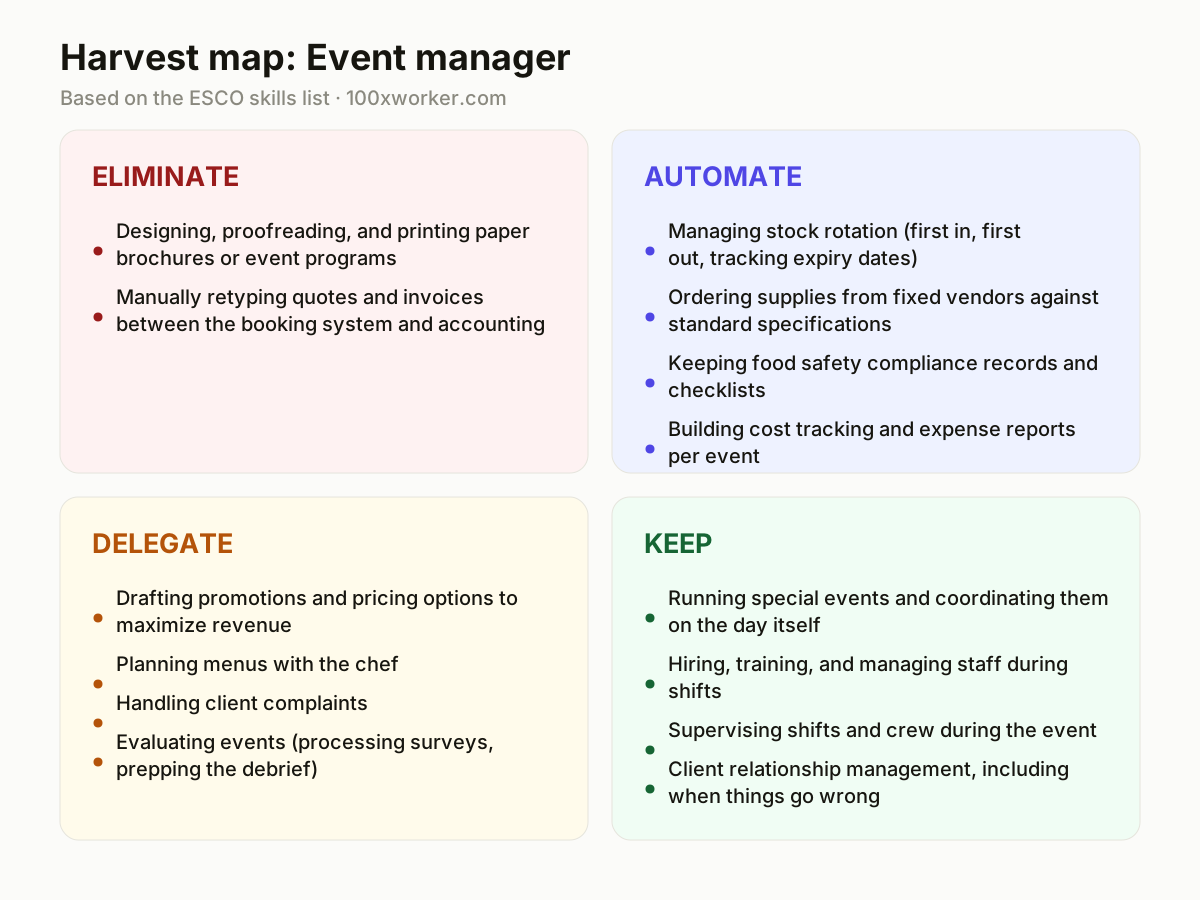
Not every task in an event manager's job changes the same way. Some tasks disappear because the paper or manual process behind them becomes pointless once software connects directly. Some get fully automated because they are rule-based and repeat on a schedule. Some get delegated to AI for a first draft that you then check and send. And some stay entirely with you because they depend on being present, reading a room, or being the person a client or staff member can actually talk to.
| Task | Bucket | Why |
|---|---|---|
| Designing, proofreading, and printing paper brochures or event programs | eliminate | AI tools generate text and layout digitally on demand, so printed brochures become unnecessary overhead. |
| Manually retyping quotes and invoices between the booking system and accounting software | eliminate | Connected systems sync data automatically, so double entry only adds a risk of errors. |
| Managing stock rotation (first in, first out, tracking expiry dates) | automate | A connected inventory system flags and reorders stock itself, without you counting every shelf. |
| Ordering supplies from fixed vendors against standard specifications | automate | Ordering agents repeat the same purchase on set triggers, which is rule-following with no real decision. |
| Keeping food safety compliance records and checklists | automate | Digital logs record temperatures and checkpoints automatically, ready for an inspection. |
| Building cost tracking and expense reports per event | automate | An AI agent pulls figures from invoices and the booking system into a ready-made report. |
| Drafting promotions and pricing options to maximize revenue | delegate | AI generates options based on past events, and you pick what fits the client. |
| Planning menus with the chef | delegate | AI drafts a menu proposal from budget, season, and dietary needs, then you and the chef adjust it. |
| Handling client complaints | delegate | AI drafts a first response using the complaint history, and you review the tone before sending. |
| Evaluating events (processing surveys, prepping the debrief) | delegate | AI summarizes survey results into a draft evaluation, and you draw the conclusions that matter for the next booking. |
| Running special events and coordinating them on the day itself | keep | On-site, everything shifts constantly: vendors, timing, weather, guests. (Your edge: Adjusting in real time is human work, and no prompt fixes it.) |
| Hiring, training, and managing staff during shifts | keep | Judging who fits your team and stays calm under pressure is a call you make yourself. (Your edge: Building trust with staff does not happen through a screen.) |
| Supervising shifts and crew during the event | keep | Adjusting who stands where in real time takes overview and on-site authority. (Your edge: Someone has to make the call on the spot.) |
| Client relationship management, including when things go wrong | keep | You win trust in a tense situation through presence and tone, not a script. (Your edge: The client wants you on the phone, not a bot.) |
Will AI replace event managers?
No, not based on current evidence. Microsoft Research's 14.7% applicability score for event and meeting planning is one of the lowest among the occupations it studied, well below roles like translation. The commonly cited 'robotization percentages' that circulate online, often traced back to Frey and Osborne's 2013 Oxford study, predate large language models entirely and should not be used to predict what happens to this job now. AI reshapes the task list of an event manager rather than the job itself: paperwork and reporting shrink, while live coordination, staffing decisions, and client trust remain firmly human.
Which event manager tasks will AI take over first?
The first tasks to go are paperwork and repetitive admin: printed brochures, manual data entry between booking and accounting systems, inventory counts, standing supply orders, and compliance logging. These are rule-based tasks with little judgment involved, which is exactly where generative AI and connected software perform reliably. Slightly further out, tasks like drafting menu proposals, complaint responses, and post-event survey summaries move to AI as a first draft that you then review and adjust. Tasks tied to being physically present on the day of the event, such as supervising crew or handling a client crisis, stay untouched for now.
How do you become the AI-savvy person on your events team?
Start by mapping your own task list into the four buckets used here: eliminate, automate, delegate, keep. Pick one recurring admin task, like expense reporting or supplier ordering, and set up a connected tool or AI workflow for it this quarter. Share the time saved with your team openly, and use it to train a colleague on the same workflow. Being the AI-savvy person on the team is less about knowing every tool and more about being the one who has already tested what works and can explain it in plain terms to the rest of the crew.
What can you do this month to start using AI?
Pick one bucket task and act on it now. Ask an AI assistant to draft a menu proposal or a complaint response using a real past event as input, then compare it to what you would have written. Check whether your booking software already offers an integration with your accounting tool to stop manual re-entry. Run one event evaluation through an AI summary tool and see how much of the report you can keep as-is. Small, testable steps beat a full workflow overhaul, and they show you quickly where AI actually saves time in your specific venue.
Generative AI is applicable to just 14.7% of the work activities of meeting, convention, and event planners, one of the lower scores among the occupations analyzed.
Microsoft Research, Working with AI: Measuring the Applicability of Generative AI to Occupations (2025)
Become the AI person on your team
Run a task audit before buying any tool
List every recurring task in your role for two weeks and sort each into eliminate, automate, delegate, or keep. This shows you exactly where AI investment pays off instead of guessing.
Pilot one workflow, not the whole operation
Choose a single low-risk task, like drafting client follow-up emails, and run it through AI for a month. Measure the time saved before rolling anything out team-wide.
Document the prompts that work
Keep a shared file of prompts that reliably produce usable drafts for menus, complaints, or reports. This turns your individual experiments into something the whole team can reuse.
Want this for your actual task list?
The free scan on the homepage builds your personal task map in 30 seconds, based on your role and industry.
Run the free task scanTools for this work
| Tool | For which tasks | The sober take |
|---|---|---|
| ChatGPT or Claude | Delegate bucket: drafting menu proposals, complaint responses, promotion ideas, and event evaluation summaries | Useful for a fast first draft, but every output still needs your review before it goes to a client. |
| Zapier or Make | Eliminate bucket: syncing data between the booking system and accounting software | Removes manual retyping between systems that already export and import data. |
| Inventory management software with automated reorder alerts | Automate bucket: stock rotation and standing supplier orders | Handles the counting and reordering so you only step in for exceptions. |
| Digital food safety logging apps | Automate bucket: compliance checklists and temperature records | Keeps records inspection-ready without manual paper logs. |
| Survey analysis tools with AI summaries | Delegate bucket: processing post-event surveys for the debrief | Speeds up the summary, but the actual conclusions for the next event stay your call. |
Prompts to try today
Draft a complaint response
Build a menu proposal
Summarize a post-event survey
Related jobs
Frequently asked questions
Is event management a job at high risk from AI?
Based on Microsoft Research's 2025 analysis, no. Event and meeting planning scored 14.7% on AI applicability, well below occupations like translation (49%) and close to roles like nursing (12%). The role depends heavily on live coordination, staffing decisions, and client relationships, tasks that current generative AI tools do not handle well. What changes is the task list underneath the job title, not the need for the role itself.
What should an event manager stop doing manually right now?
Stop retyping data between your booking system and your accounting software if both tools support integrations. Stop tracking stock rotation and expiry dates on paper or spreadsheets when connected inventory software can flag reorders automatically. These are the tasks in the eliminate and automate buckets: rule-based, repetitive, and already handled reliably by connected software rather than AI judgment.
Can AI write my event proposals and client communications?
AI can draft a first version of a menu proposal, a promotion idea, or a complaint response based on past events and client history. You should always review, adjust the tone, and confirm the details before sending anything to a client. Treat AI output as a draft from a junior team member, not a final answer, especially when pricing or dietary safety is involved.
Which event management skills will matter more, not less, because of AI?
Real-time problem-solving on the day of the event, staff supervision, and client trust-building all matter more as routine admin shrinks. As AI takes over reporting and compliance logging, the time you free up should go toward the parts of the job that depend on being present: reading a room, calming a nervous client, and making fast calls when a vendor is late or a room needs rearranging.
Sources
- Microsoft Research, Working with AI: Measuring the Applicability of Generative AI to Occupations (2025)
- Anthropic Economic Index
- Eurostat, isoc_ai_iaiu (2025)
- ESCO, European Commission occupation taxonomy
Hendrik De Winne, author of Becoming AI-Savvy, founder of VibeLab. Helps teams redesign their work with AI.
This article was drafted with AI assistance from public data sources and editorially reviewed.