100×worker · job analysis
Will AI Replace Real Estate Agents?

Real estate agents (letting agents, in ESCO terms) spend a lot of the working day on things that have nothing to do with people skills: retyping property data across systems, drafting listing text, chasing a free viewing slot by phone. That is exactly the kind of work generative AI is good at. Microsoft Research analyzed 200,000 real Copilot conversations across occupations and found that generative AI is applicable to about 26.5% of the work activities of real estate sales agents, the closest US occupation category to letting agents. For comparison: translators score highest at 49%, nurses score low at 12% (Microsoft Research, 2025).
That number does not mean a quarter of the job disappears. It means a chunk of the paperwork, drafting, and scheduling can move to a tool, freeing time for the parts of the job that still need a person in the room: the viewing itself, the negotiation, the read on what a client actually wants. Anthropic's Economic Index, which classifies large volumes of Claude conversations against O*NET task lists, makes a similar split across occupations between automation-like use (AI does the task) and augmentation-like use (AI assists while a person decides).
Adoption is already broad. Eurostat reports that 32.7% of the EU population aged 16 to 74 used generative AI in the three months before being surveyed in 2025. A separate Google/Ipsos survey found 61% of Belgians had used an AI chatbot in 2025. Agents who are not yet using these tools for drafting and research are behind a large and growing share of their own client base.
A real estate agent manages viewings, negotiations, and paperwork between property owners and prospective tenants or buyers.
The task split: what AI takes over and what stays yours
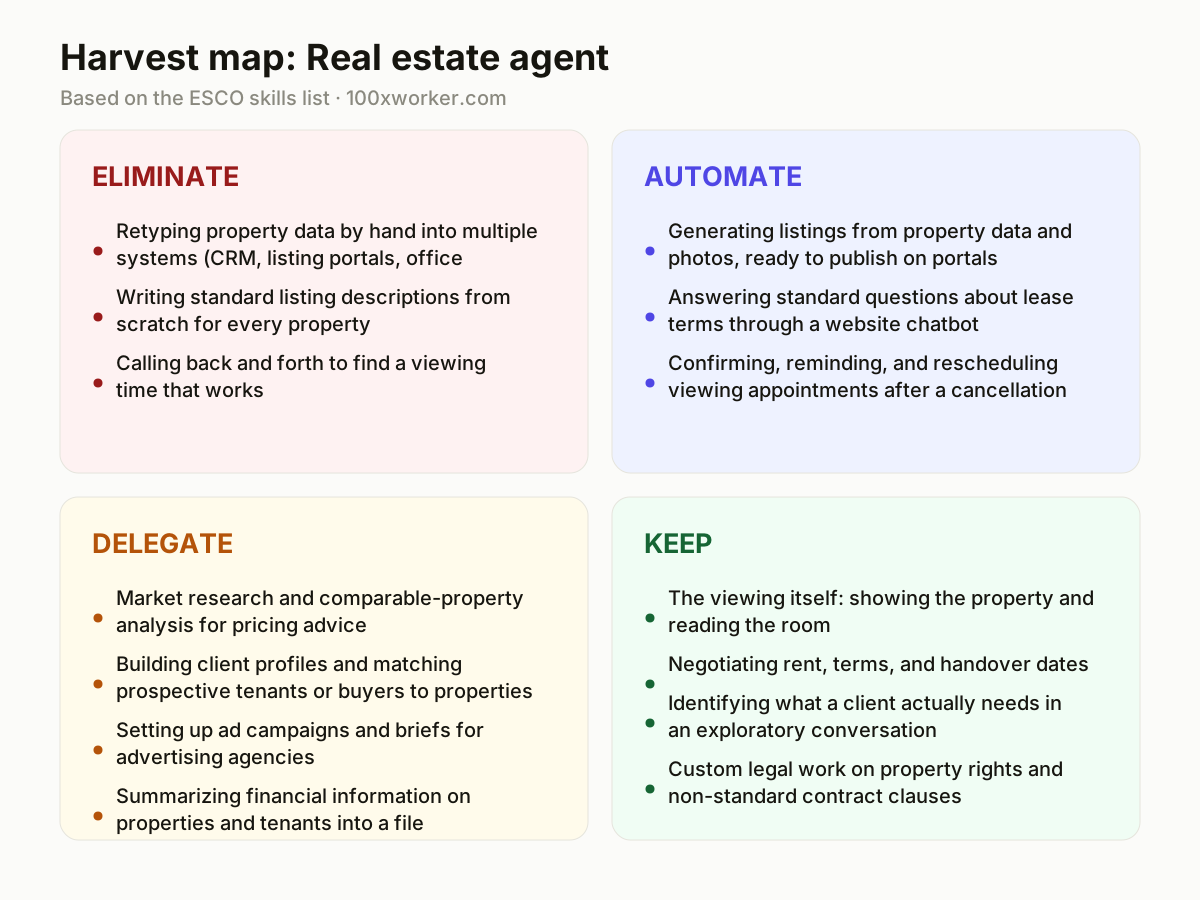
Instead of asking whether AI will take a real estate agent's job, it helps to break the job into its actual tasks, the same way the ESCO taxonomy does with its list of skills for this occupation. Some tasks can be dropped entirely once a tool exists to make them unnecessary (eliminate). Some can run without you watching them (automate). Some benefit from an AI first pass that you check and finish (delegate). And some stay yours because they depend on presence, judgment, or liability (keep).
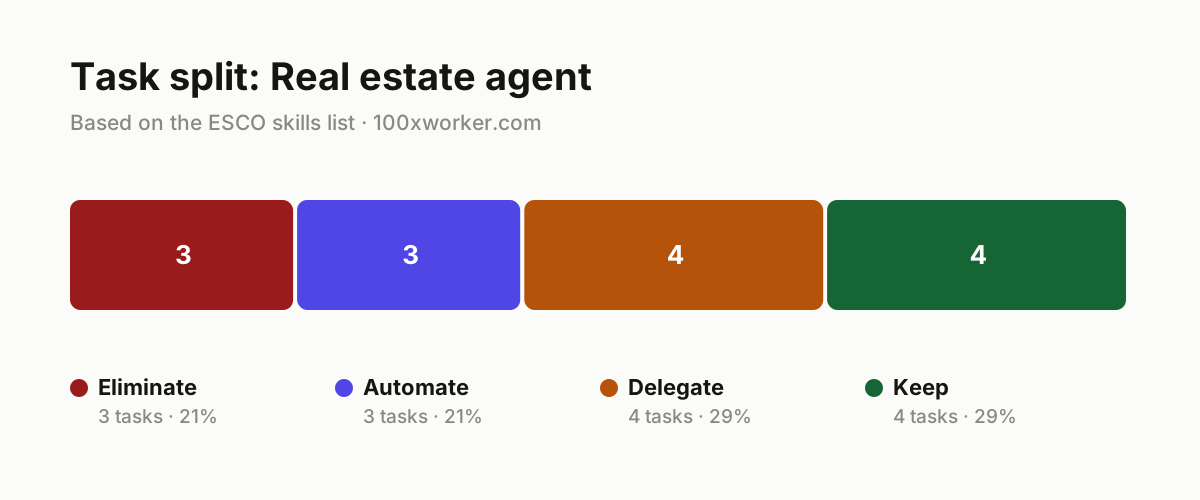
| Task | Bucket | Why |
|---|---|---|
| Retyping property data by hand into multiple systems (CRM, listing portals, office software) | eliminate | One data source with automatic sync removes the duplicate entry work entirely. |
| Writing standard listing descriptions from scratch for every property | eliminate | A template fed with property data generates the base text without you. |
| Calling back and forth to find a viewing time that works | eliminate | Calendar links with self-booking make this phone tag unnecessary. |
| Generating listings from property data and photos, ready to publish on portals | automate | The system turns structured data into publish-ready copy on its own. |
| Answering standard questions about lease terms through a website chatbot | automate | Repeat questions about price, size, and availability need no human judgment. |
| Confirming, reminding, and rescheduling viewing appointments after a cancellation | automate | Calendar logic handles confirmation and reminders without any oversight. |
| Market research and comparable-property analysis for pricing advice | delegate | AI pulls comparables fast, you check them against local knowledge and set the price. |
| Building client profiles and matching prospective tenants or buyers to properties | delegate | AI filters on stated criteria, you judge the fit and the client's real situation. |
| Setting up ad campaigns and briefs for advertising agencies | delegate | AI drafts a first concept and media plan, you steer tone and budget. |
| Summarizing financial information on properties and tenants into a file | delegate | AI structures the numbers and documents, you assess creditworthiness and risk. |
| The viewing itself: showing the property and reading the room | keep | Physical presence and a first-hand impression do not automate. (Your edge: Building trust on the spot) |
| Negotiating rent, terms, and handover dates | keep | Negotiation needs a read on the other party, not just data. (Your edge: Reading people and timing a deal) |
| Identifying what a client actually needs in an exploratory conversation | keep | Probing for what someone really wants stays a human conversation. (Your edge: Empathy and the right follow-up question) |
| Custom legal work on property rights and non-standard contract clauses | keep | When liability and law are in question, a person carries the responsibility. (Your edge: Carrying liability on custom terms) |
Will AI replace real estate agents?
Not the whole job. Microsoft Research's applicability score puts generative AI's reach into real estate sales agent work at 26.5% of activities, well below jobs built almost entirely on text, like translation (49%), and well above jobs built on hands-on care, like nursing (12%). AI tends to reshape the task list inside a job rather than delete the job itself. What changes is time allocation: less time on admin and drafting, more time on the viewing, the negotiation, and the client conversation that a chatbot cannot run for you.
Which real estate agent tasks does AI take over?
AI is strongest on repetitive, text-heavy, low-judgment work. That includes turning property data and photos into a listing draft, answering routine questions about rent, size, or availability through a website chatbot, and handling appointment confirmations and reminders for viewings. It is weakest on anything requiring physical presence, a read on a person, or legal responsibility. So AI takes over the drafting and the scheduling logic. It does not take over the viewing, the negotiation, or the judgment call on whether a clause is safe to sign.
What can you do this month with AI as a real estate agent?
Start with the lowest-risk, highest-repetition tasks. Feed property data and photos into an AI tool to draft your next listing, then edit it instead of writing from zero. Set up a self-booking calendar link so prospective tenants pick their own viewing slot. Ask an AI tool to pull comparable properties and recent rents for your next pricing conversation, then check the list against what you know about the street and the building. None of this requires new software licenses beyond a chatbot subscription and a scheduling tool you may already have.
How do you become the AI-savvy person in your real estate office?
Pick one repetitive task your whole office does by hand, like listing drafts or comparable research, and build a working AI process for it first. Document the prompt and the steps so a colleague can run it without you. Track the time saved for a month and share the number in a team meeting. Being the AI-savvy person in an office is less about knowing every tool and more about being the one who already tested the workflow everyone else is still avoiding.
Generative AI is applicable to roughly a quarter of the work activities of real estate sales agents, well below occupations built mostly on text.
Microsoft Research, Working with AI: Measuring the Applicability of Generative AI to Occupations (2025)
Become the AI person on your team
Own the listing template
Build one working prompt that turns raw property data and photos into a publish-ready listing draft. Test it on five properties, fix the parts that read generic, and hand the template to colleagues.
Set up the chatbot for routine questions
Configure a simple website chatbot to answer questions about rent, size, availability, and viewing hours. Route anything about contracts or negotiation straight to a person.
Run the comparable-property check before every price talk
Use an AI tool to pull recent comparable listings and rents before you set an asking price, then cross-check against local knowledge the tool does not have.
Want this for your actual task list?
The free scan on the homepage builds your personal task map in 30 seconds, based on your role and industry.
Run the free task scanTools for this work
| Tool | For which tasks | The sober take |
|---|---|---|
| ChatGPT or Claude | Listing drafts, ad campaign briefs, financial summary drafts (delegate/automate buckets) | Useful for a fast first draft, not for the final legal wording. |
| A CRM with built-in AI drafting (e.g. kvCORE, Follow Up Boss) | Client profile building, matching tenants or buyers to listings (delegate bucket) | Reduces manual data entry but still needs a human check on the match. |
| A scheduling tool with self-booking (e.g. Calendly) | Booking, confirming, and rescheduling viewings (eliminate/automate buckets) | Removes phone tag entirely once tenants get used to booking themselves. |
| A website chatbot builder | Answering standard lease-term questions (automate bucket) | Works well for repeat questions, needs a clear handoff to a person for anything else. |
Prompts to try today
Draft a listing from raw property data
Pull comparable properties for a pricing conversation
Summarize a tenant's financial file before a decision
Related jobs
Frequently asked questions
Which real estate agent tasks are safest from AI?
The viewing itself, negotiation, and reading what a client actually wants stay largely human. These depend on physical presence, a read on the other party, and judgment calls that carry legal or financial weight, none of which a chatbot can do on its own. Custom legal work on property rights and non-standard clauses also stays with a person, since liability sits with a human when something goes wrong.
Do I need to learn to code to use AI in real estate?
No. Most of the useful tools for this job, listing generators, chatbots, scheduling apps, work through plain-language prompts or simple setup screens. What helps is knowing which tasks to hand to a tool (drafting, scheduling, comparable research) and which to keep for yourself (viewings, negotiation, legal judgment calls).
How fast is AI adoption in real estate compared to other jobs?
Microsoft Research's applicability score for real estate sales agents is 26.5%, which is a mid-range figure. Translators score highest at 49%, since their work is almost entirely text-based, while nurses score low at 12%, since their work is mostly hands-on and physically present. Real estate sits between these because it mixes text-heavy admin with in-person work that does not automate.
Will smaller agencies fall behind larger ones on AI?
It's a real risk if smaller agencies keep doing all drafting and data entry by hand. The tools involved (listing generators, chatbots, scheduling links) are not expensive or hard to set up, so the gap is more about habits than budget. An agent who adopts one workflow this month, like an AI-drafted listing template, closes most of that gap quickly.
Sources
- Microsoft Research, Working with AI: Measuring the Applicability of Generative AI to Occupations (2025)
- Anthropic Economic Index
- Eurostat, isoc_ai_iaiu (generative AI use, EU population 16-74, 2025)
- ESCO, European Commission occupation taxonomy
Hendrik De Winne, author of Becoming AI-Savvy, founder of VibeLab. Helps teams redesign their work with AI.
This article was drafted with AI assistance from public data sources and editorially reviewed.