100×worker · job analysis
Will AI Replace Radiographers?
Radiographers spend their days positioning patients, operating imaging equipment, and coordinating with radiologists. Headlines about AI reading scans faster than doctors make it easy to assume the job is at risk. The data says otherwise. Microsoft Research analyzed 200,000 real Copilot conversations and scored how applicable generative AI is to hundreds of occupations. Radiologic technologists and technicians came in at 10.3%, one of the lowest scores in healthcare and far below translators at 49% (Microsoft Research, Working with AI, 2025).
That low score doesn't mean nothing changes. Across the EU, 32.7% of people aged 16 to 74 used generative AI in the three months before being surveyed in 2025 (Eurostat). Hospitals and imaging centers are adopting AI tools for scheduling, documentation, and image quality checks even where the core clinical work stays untouched. The real question is which parts of the job AI touches, not whether it touches the job at all.
This article breaks the radiographer role down using ESCO's occupational taxonomy, which catalogs skills for 3,039 jobs across 28 languages (European Commission). We sort tasks into four buckets, eliminate, automate, delegate, and keep, so you can see exactly where your time is better spent.
A radiographer is a healthcare professional who uses imaging technology to support diagnosis and treatment.
The task split: what AI takes over and what stays yours
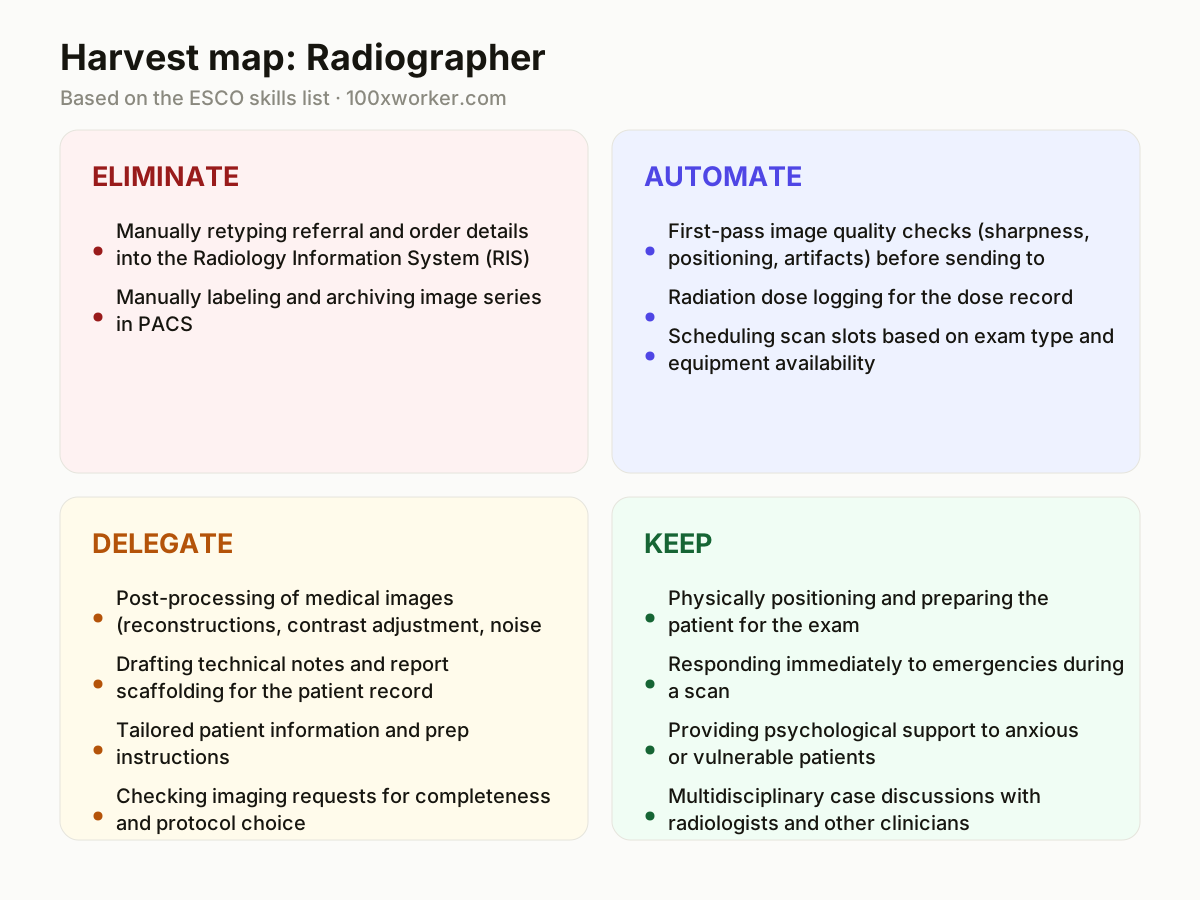
The eliminate/automate/delegate/keep framework sorts tasks by how much human judgment they require. Eliminate covers manual work that adds no value once software handles it invisibly. Automate covers rule-based tasks a system can run with light oversight. Delegate covers work where AI drafts and you approve, close to what Anthropic's Economic Index calls augmentation rather than full automation. Keep covers the physical, emotional, and clinical-judgment work that stays with you regardless of how good the tools get.
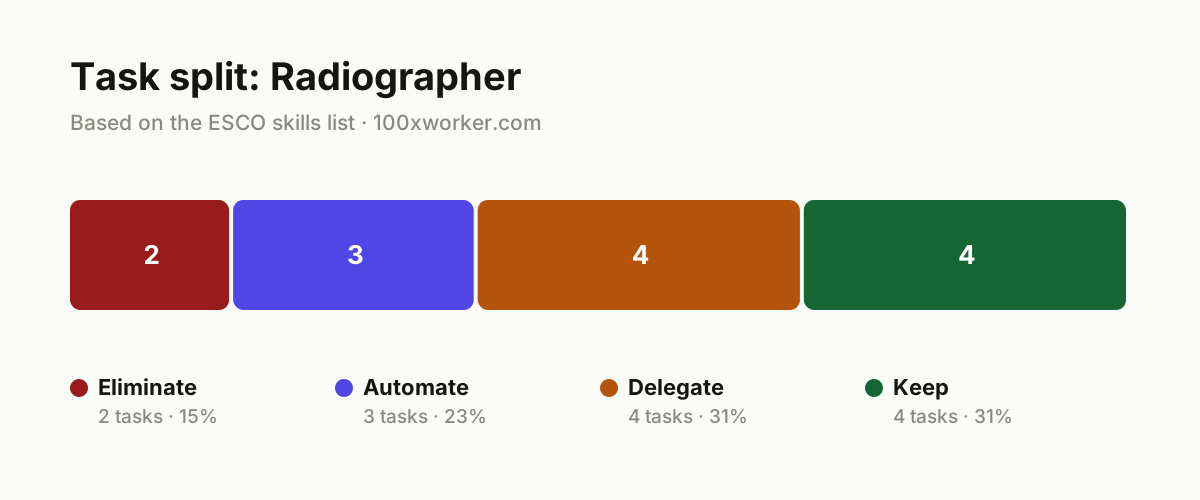
| Task | Bucket | Why |
|---|---|---|
| Manually retyping referral and order details into the Radiology Information System (RIS) | eliminate | Data flows automatically from the electronic health record or referral portal; retyping adds no value. |
| Manually labeling and archiving image series in PACS | eliminate | Indexing and archiving follow fixed metadata rules; no human judgment required. |
| First-pass image quality checks (sharpness, positioning, artifacts) before sending to the radiologist | automate | Rule-based checks against fixed criteria; software flags problems faster and more consistently. |
| Radiation dose logging for the dose record | automate | Fixed calculation rules and mandatory reporting make this ideal for automatic, error-free logging. |
| Scheduling scan slots based on exam type and equipment availability | automate | A repeatable optimization problem with fixed rules; software schedules faster with fewer gaps. |
| Post-processing of medical images (reconstructions, contrast adjustment, noise reduction) | delegate | AI proposes an edit based on protocol; you review and approve before it goes out. |
| Drafting technical notes and report scaffolding for the patient record | delegate | AI writes a first version from fixed fields; you add the clinical nuance. |
| Tailored patient information and prep instructions | delegate | AI generates a draft in plain language; you check medical accuracy and tone. |
| Checking imaging requests for completeness and protocol choice | delegate | AI flags missing data or a questionable protocol; you decide and follow up if needed. |
| Physically positioning and preparing the patient for the exam | keep | Requires physical contact, real-time adjustment to the patient's body, and direct conversation. (Your edge: Physical touch and reassurance no screen can replace.) |
| Responding immediately to emergencies during a scan | keep | Needs split-second decisions under pressure with full clinical responsibility. (Your edge: Real-time judgment and accountability that can't be handed off.) |
| Providing psychological support to anxious or vulnerable patients | keep | Requires empathy and reading someone's emotional state right before a procedure. (Your edge: Building trust in person, something no chatbot replicates.) |
| Multidisciplinary case discussions with radiologists and other clinicians | keep | Requires clinical judgment, context, and shared accountability among professionals. (Your edge: Shared decisions with colleagues who carry their own liability.) |
Will AI replace radiographers?
No. Radiography combines physical patient handling, equipment operation, and real-time clinical judgment, none of which current generative AI can do. Microsoft Research's applicability score for radiologic technologists sits at 10.3%, near the bottom of the healthcare occupations it measured and well below roles built around text and language, like translation at 49%. AI is strong at pattern recognition in images and at drafting text, both useful to radiographers, but the job also requires positioning a frightened patient, adjusting technique to their body in real time, and responding to a medical emergency mid-scan. Those tasks stay with a person. What changes is the share of your shift spent on data entry, scheduling, and first-pass image checks.
Which radiographer tasks will AI take over first?
The tasks going first are the ones with fixed rules and no judgment call: retyping referral data into the RIS, labeling and archiving image series in PACS, checking initial image quality against known criteria, logging radiation dose, and building scan schedules around equipment availability. These are repetitive, rule-based, and already partly automated in many imaging departments. Next come tasks AI can draft but you still approve: image post-processing, technical notes, patient prep instructions, and a first read on whether an imaging request is complete. The physical exam, emergency response, and patient reassurance are not on this list, and current AI applicability data suggests they won't be soon.
What can you do this month to become your team's AI go-to person?
Pick one recurring task, drafting patient prep instructions or technical notes is a good start, and test an AI assistant on it for two weeks. Compare its draft against what you'd normally write, note where it gets clinical details wrong, and keep a short log. Bring that log to your department's next meeting and propose a simple rule: AI drafts, a radiographer checks. Ask your PACS or RIS vendor what AI-based quality-control or scheduling features already exist in your current contract; many go unused. Being the person who tested it first, with evidence, puts you ahead of a department-wide rollout decided without radiographer input.
How will AI change the radiographer role in the long run?
Expect less time on documentation and scheduling and more time on tasks that need a person: complex positioning, pediatric and anxious patients, emergency response, and multidisciplinary discussion of difficult cases. Anthropic's Economic Index tracks a broad shift from AI purely automating tasks toward AI augmenting how professionals work, drafting first and having a human finish. In radiography, that likely means image post-processing and report drafting move to AI-assisted workflows while the exam itself stays hands-on. ESCO's occupational data lists dozens of core radiographer skills, from radiation protection to patient psychology, and only a handful overlap with what generative AI does well. The role narrows toward its most human parts, it does not disappear.
Radiologic technologists and technicians show one of the lowest generative AI applicability scores of any occupation measured, at 10.3% of work activities.
Microsoft Research, Working with AI (2025)
Become the AI person on your team
Pilot one AI draft task
Choose a low-risk task like patient prep instructions and run it through an AI assistant for two weeks. Keep a log of errors and time saved so you have evidence, not opinion, to bring to your department.
Audit your PACS/RIS for unused AI features
Many imaging systems already include AI-based quality-control or scheduling modules that departments never switch on. Ask your vendor for a feature list and test one this quarter.
Write the review checklist
If AI starts drafting reports or post-processing images, someone needs to define what a human checks before approval. Volunteer to write that checklist before management does it without radiographer input.
Want this for your actual task list?
The free scan on the homepage builds your personal task map in 30 seconds, based on your role and industry.
Run the free task scanTools for this work
| Tool | For which tasks | The sober take |
|---|---|---|
| PACS-integrated QA modules | First-pass image quality checks, image archiving | Available from several major PACS vendors, but adoption varies widely by hospital contract. |
| RIS scheduling software | Scan slot planning based on exam type and equipment availability | Rule-based optimization; most modern RIS platforms already support some version of this. |
| General-purpose AI assistants (Microsoft Copilot, Anthropic Claude) | Drafting technical notes, patient information, and report scaffolding | Studied for applicability across occupations broadly, not built for radiography specifically; check data privacy rules before clinical use. |
| Automated dose-tracking systems | Radiation dose logging for the dose record | Fixed calculation rules make this a straightforward automation target. |
Prompts to try today
Draft patient prep instructions
Draft a technical note for the record
Check an imaging request for completeness
Related jobs
Frequently asked questions
Can AI read X-rays and scans instead of a radiographer?
AI image-analysis tools can flag possible abnormalities in some scan types, but that is typically a radiologist's diagnostic task, not a radiographer's. Radiographers acquire the images: positioning the patient, choosing technique, running the equipment, and judging image quality in real time. Microsoft Research's applicability score for the occupation, 10.3%, reflects how little of that hands-on acquisition work generative AI currently handles.
Will hospitals cut radiographer jobs because of AI?
There is no verified data showing job cuts tied to AI adoption in radiography. What the occupational data shows is a shift in task mix: less time on data entry, archiving, and scheduling, more time on the parts of the job that need a person present. Departments differ widely in how fast they adopt these tools, so timelines vary by employer.
Do I need to learn to code or use AI tools to stay employable?
No coding required. What helps is comfort testing AI drafting tools for documentation and patient information, and knowing enough to check their output for clinical accuracy. ESCO already lists digital health technology skills, such as using electronic and mobile health technologies, among core radiographer competencies.
How is this different from older automation predictions for healthcare jobs?
Earlier studies, like Frey and Osborne's widely cited 2013 Oxford analysis, estimated automation risk before large language models existed and used broad occupational categories. Microsoft's 2025 data comes from analyzing real generative AI conversations task by task, which is why the two sources produce very different pictures for the same job.
Sources
- Microsoft Research, Working with AI: Measuring the Applicability of Generative AI to Occupations (2025)
- Anthropic Economic Index
- Eurostat, isoc_ai_iaiu (generative AI use, 2025)
- ESCO, European Commission
Hendrik De Winne, author of Becoming AI-Savvy, founder of VibeLab. Helps teams redesign their work with AI.
This article was drafted with AI assistance from public data sources and editorially reviewed.