100×worker · job analysis
Will AI replace occupational therapists, and what should you do about it?
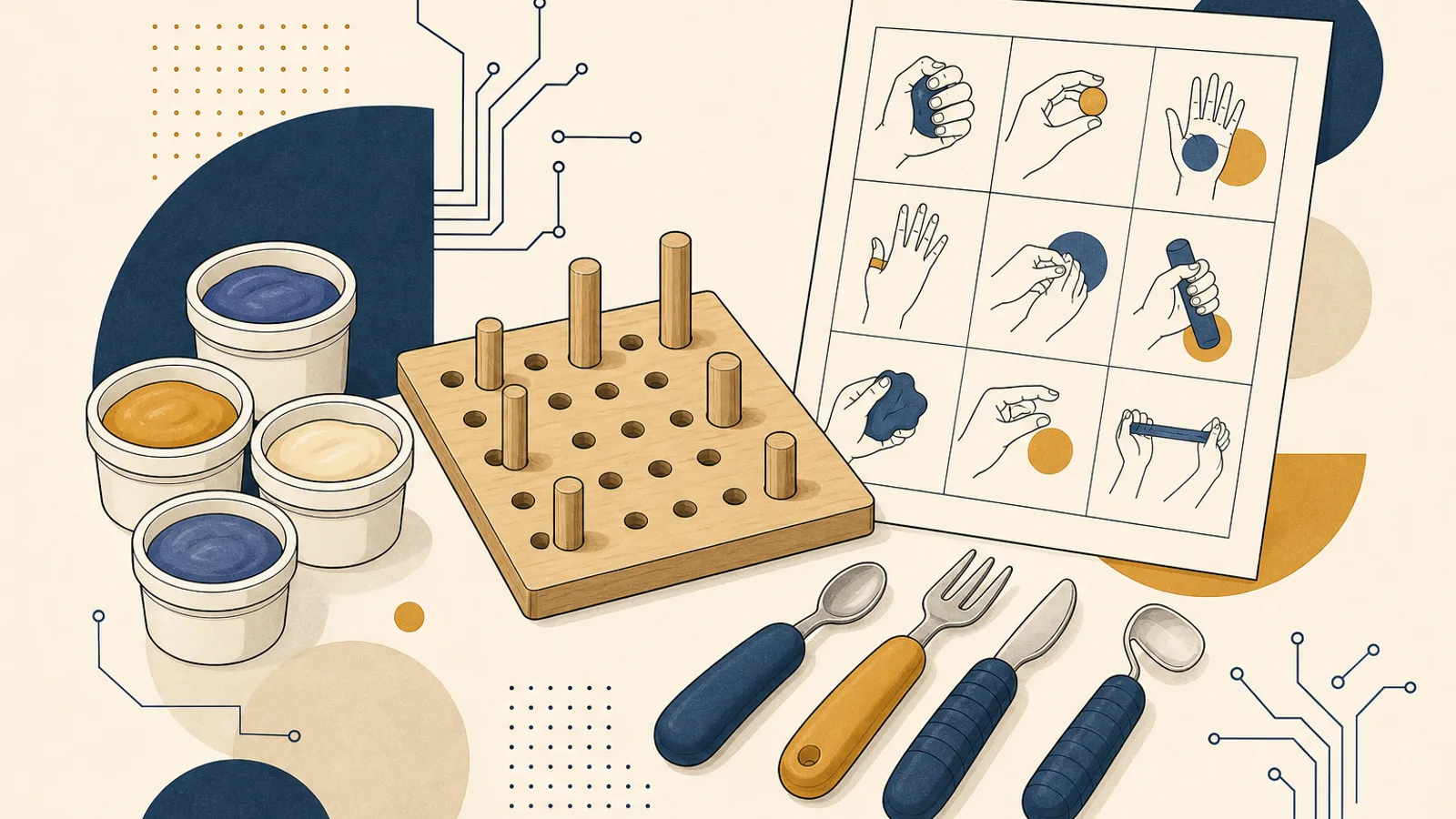
Occupational therapists spend their days between two very different kinds of work. There is the hands-on part: guiding a patient through a movement exercise, adjusting a grip, reading a face for signs of frustration or fatigue. And there is the paperwork part: session notes, treatment plans, billing forms, and progress logs. AI is reshaping the second kind of work far more than the first.
Microsoft Research analyzed 200,000 real conversations people had with its Copilot assistant and scored how much of each occupation's actual work generative AI can plausibly touch. Occupational therapists scored 10.6%, one of the lower scores in the study, far below translators (49%) and also below many other health roles. That does not mean nothing changes. It means the change is concentrated in documentation and administration, not in the treatment room.
Anthropic's Economic Index, which classifies millions of Claude conversations against standardized task lists, finds a similar pattern across healthcare roles: AI use skews toward augmentation (drafting, summarizing, checking) rather than full automation of the job. For occupational therapists, that distinction matters. This article breaks the job into four buckets: tasks to eliminate outright, tasks to automate, tasks to delegate to AI with your review, and tasks to keep firmly in human hands.
An occupational therapist helps people with disabilities regain independence in daily activities.
The task split: what AI takes over and what stays yours
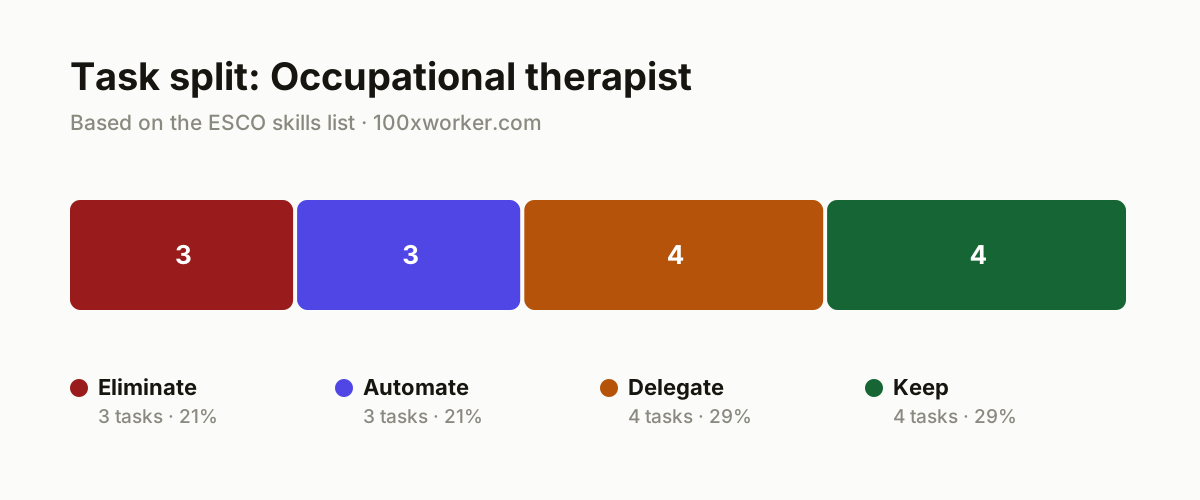
Not every task in the occupational therapist's job is affected the same way by AI. Some tasks were already unnecessary duplication and should simply disappear. Others are repetitive enough that software can do them end to end. A third group is worth drafting with AI and then checking yourself. The rest, the physical, relational, and judgment-heavy work, stays with the clinician. Sorting your own task list into these four buckets, eliminate, automate, delegate, and keep, is the fastest way to see where your time actually goes.
| Task | Bucket | Why |
|---|---|---|
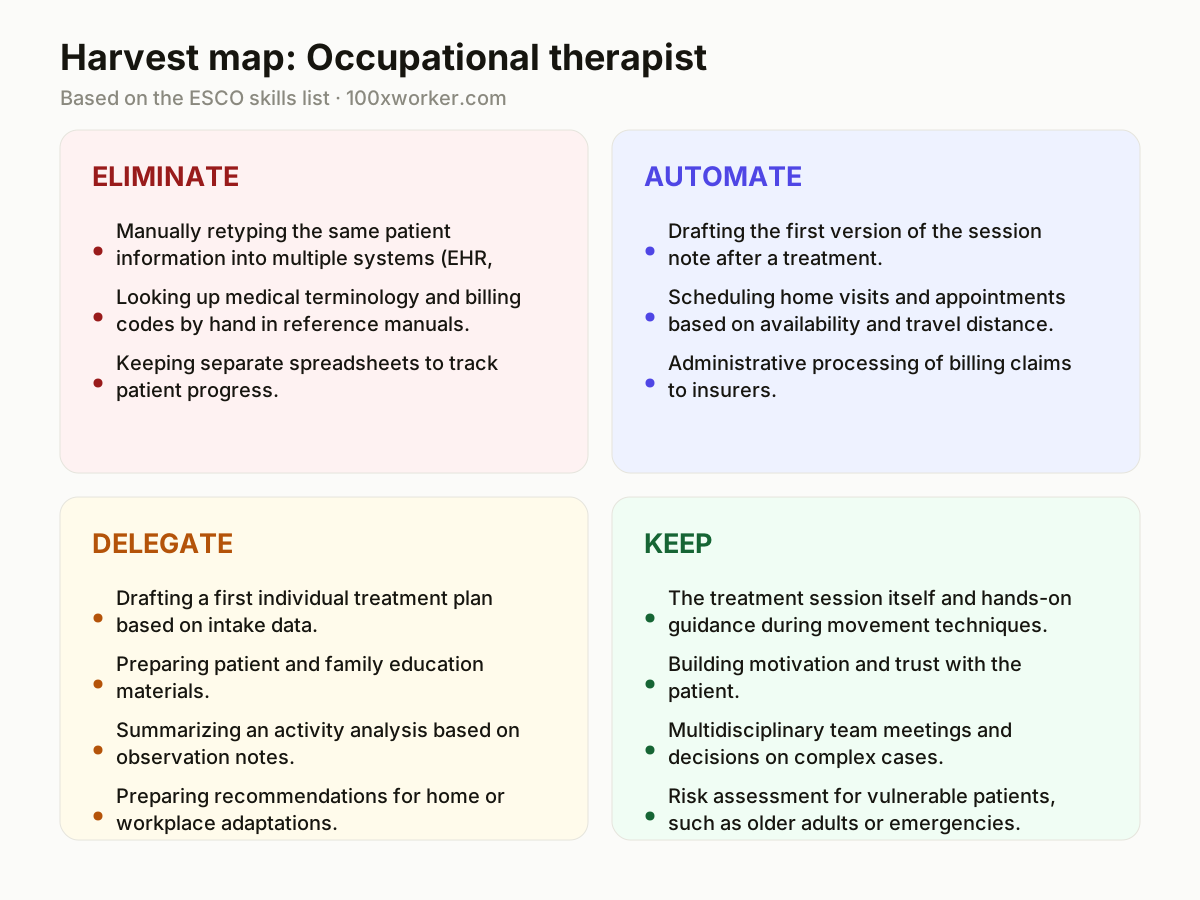
| Manually retyping the same patient information into multiple systems (EHR, insurer forms, internal spreadsheets). | eliminate | One integration or a smart EHR field removes duplicate typing entirely, with no loss of information. |
| Looking up medical terminology and billing codes by hand in reference manuals. | eliminate | A search function or AI assistant finds the right term faster and more consistently than a printed manual. |
| Keeping separate spreadsheets to track patient progress. | eliminate | That overview already belongs in a proper EHR system, so extra spreadsheets are duplicate work. |
| Drafting the first version of the session note after a treatment. | automate | AI turns raw notes or dictation into a structured note that is ready for the chart. |
| Scheduling home visits and appointments based on availability and travel distance. | automate | A scheduling agent plans realistic routes and flags conflicts without you filling in every slot. |
| Administrative processing of billing claims to insurers. | automate | Repetitive forms and codes get filled in correctly by an agent while you check the result. |
| Drafting a first individual treatment plan based on intake data. | delegate | AI generates a draft with goals and methods, and you check it against your clinical judgment. |
| Preparing patient and family education materials. | delegate | AI writes a first version in plain language, and you check tone and medical accuracy. |
| Summarizing an activity analysis based on observation notes. | delegate | AI organizes observations into a readable analysis, and you decide what is clinically relevant. |
| Preparing recommendations for home or workplace adaptations. | delegate | AI lists standard adaptation options, and you translate that into the patient's actual situation. |
| The treatment session itself and hands-on guidance during movement techniques. | keep | This requires physical contact, in-the-moment adjustment, and clinical judgment. (Your edge: Hands, eyes, and real-time correction during the session.) |
| Building motivation and trust with the patient. | keep | Motivation techniques only work with genuine, personal attention and recognition. (Your edge: Empathy and reading non-verbal cues, something only a human does well.) |
| Multidisciplinary team meetings and decisions on complex cases. | keep | This requires weighing input across disciplines and responsibility that stays with the clinician. (Your edge: Taking responsibility and making ethical trade-offs as a team.) |
| Risk assessment for vulnerable patients, such as older adults or emergencies. | keep | A wrong call has direct safety consequences and requires clinical accountability. (Your edge: Final responsibility and fast clinical judgment in the real moment.) |
Will AI replace occupational therapists?
No. Occupational therapy scores 10.6% on Microsoft Research's applicability index, meaning generative AI can plausibly touch only about a tenth of the tasks that make up the job, based on analysis of 200,000 real Copilot conversations. Compare that to 49% for translators. The reason is structural: treatment sessions require physical presence, adaptive judgment, and trust built over repeated contact. AI can draft your notes, summarize an assessment, or prepare an education handout, but it cannot guide a stroke patient's hand through a grip exercise or read the frustration on their face. The job's core, hands-on rehabilitation and relationship building, is not something a chatbot performs. What does change is the volume of paperwork and admin sitting around that core work.
Which occupational therapist tasks will AI take over first?
Documentation goes first. Drafting session notes from dictation or shorthand, generating a first-pass treatment plan from intake data, and writing patient education handouts are all tasks AI already handles reasonably well, provided a clinician reviews the output. Scheduling and routing for home visits follow closely, since that is a logistics problem with clear inputs and outputs. Billing and insurance paperwork are also strong candidates, since they involve repetitive, rule-based data entry. None of these changes require you to give up clinical control. They shift your role from typing everything from scratch to reviewing, correcting, and signing off on a draft, which is faster but still requires your judgment.
How do you become the AI go-to person on your team as an occupational therapist?
Start by being the one who tests a note-drafting workflow first and shares what worked, rather than waiting for a hospital-wide rollout. Keep a short log of prompts that produce usable first drafts for treatment plans or patient handouts, and share it with colleagues. Volunteer to pilot a scheduling or dictation tool before your department mandates one, so you can flag what breaks in real clinical use, such as missed context or wrong terminology. Being the person who understands both the clinical workflow and the tool's limits makes you the point of reference when management asks which AI tool to adopt team-wide.
What can you already do with AI this month as an occupational therapist?
Pick one recurring document, such as your session note template, and try drafting it with an AI assistant from your raw notes or dictation for two weeks. Compare the time saved against the time spent editing. Next, ask an AI tool to turn one of your standard patient handouts into plain language at a lower reading level, then check it for medical accuracy yourself. Finally, try using AI to draft a first version of one activity analysis summary from your observation notes. None of this requires new software approval if you already have access to a general AI assistant; it just requires you to test it on real, low-risk documents first.
Occupational therapy scores 10.6% on our AI applicability index, compared with 49% for translation.
Microsoft Research
Become the AI person on your team
Pilot the note-drafting workflow before your department does
Take your own dictation or shorthand from a real session (with identifying details removed) and run it through an AI assistant to see how close the draft gets to your usual note format. Share the prompt and the result with two colleagues so the improvement spreads without waiting for IT.
Build a small library of reusable prompts
Keep three or four prompts that reliably produce usable drafts, one for treatment plans, one for patient handouts, one for activity analysis summaries. Store them somewhere your team can find them, so newer colleagues do not start from zero.
Flag where AI drafts get clinical details wrong
When an AI-generated note or handout misstates a technique, a dosage, or a contraindication, document the error and share it with whoever manages your practice's AI tools. This kind of feedback is what turns a generic tool into one that actually fits clinical work.
Want this for your actual task list?
The free scan on the homepage builds your personal task map in 30 seconds, based on your role and industry.
Run the free task scanTools for this work
| Tool | For which tasks | The sober take |
|---|---|---|
| AI-assisted clinical documentation tools built into EHR systems | Automate: drafting the first version of the session note | Quality varies a lot by vendor, so test on real (anonymized) notes before trusting the output. |
| General AI assistants (ChatGPT, Claude, Copilot) | Delegate: drafting treatment plans, patient education material, activity analysis summaries | Useful for a fast first draft, but every clinical detail still needs a human check. |
| Scheduling and routing software with AI features | Automate: planning home visits and appointments | Works best when travel distance and availability data are already accurate in the system. |
| Dictation-to-text tools | Eliminate: manual retyping of patient information; Automate: session note drafts | Cuts typing time but still requires proofreading for medical terminology errors. |
Prompts to try today
Turn session notes into a structured chart entry
Draft a first treatment plan from intake data
Simplify a patient handout
Related jobs
Frequently asked questions
Will AI take over the job of occupational therapist entirely?
No. Microsoft Research's analysis of 200,000 real Copilot conversations gives occupational therapy an applicability score of 10.6%, one of the lower scores across occupations studied. The physical, relational, and judgment-heavy parts of the job, such as guiding movement exercises and building patient trust, are not something current AI systems can perform. What is changing is the paperwork and scheduling load around those core tasks.
Which part of my job as an occupational therapist should I hand to AI first?
Start with documentation. Drafting the first version of a session note from dictation or shorthand is one of the clearest wins, since it saves time without touching the actual treatment. Scheduling of home visits and first-draft treatment plans from intake data are good next candidates, as long as you keep reviewing the output before it goes into the patient record.
Is AI use common among healthcare professionals like occupational therapists?
General AI adoption is rising fast across the population. Eurostat reports that 32.7% of the EU population aged 16 to 74 used generative AI in the three months before being surveyed in 2025. Healthcare-specific adoption data is less complete, but Anthropic's Economic Index shows healthcare-related AI use leaning toward augmentation, meaning drafting and checking, rather than full task automation.
How do I know which of my daily tasks AI can actually help with?
List your recurring tasks and sort them into four groups: tasks you should stop doing altogether (like retyping the same data into two systems), tasks a tool can fully automate (like appointment scheduling), tasks worth drafting with AI and then checking yourself (like a treatment plan or handout), and tasks that need a human no matter what (like the treatment session itself). This sorting exercise, applied to your own week, tells you more than any general industry statistic.
Sources
- Microsoft Research, Working with AI: Measuring the Applicability of Generative AI to Occupations (2025)
- Anthropic Economic Index
- Eurostat, isoc_ai_iaiu
- ESCO, European Commission
Hendrik De Winne, author of Becoming AI-Savvy, founder of VibeLab. Helps teams redesign their work with AI.
This article was drafted with AI assistance from public data sources and editorially reviewed.