100×worker · job analysis
Will AI Replace Nurses, and What Should You Do About It?
If you work as a nurse, you have probably heard someone predict that AI will replace you within a few years. The data does not support that. Microsoft Research analyzed 200,000 real Copilot conversations and built an applicability score for each occupation: the share of work activities where generative AI can plausibly help. Registered nurses scored 12.2%, near the bottom of the entire list. Translators, by comparison, scored 49%.
That low score does not mean nothing changes. It means the change is concentrated in specific tasks, not the whole job. Anthropic's Economic Index, which maps millions of real chatbot conversations against standardized occupational task lists, finds a similar pattern across health care: AI shows up far more often as an assistant helping with a task (augmentation) than as something replacing the task outright (automation).
This article breaks the nursing job into four buckets: tasks to stop doing by hand, tasks to automate fully, tasks to delegate to AI with your review, and tasks to keep doing yourself because they depend on physical presence, judgment under pressure, or human contact.
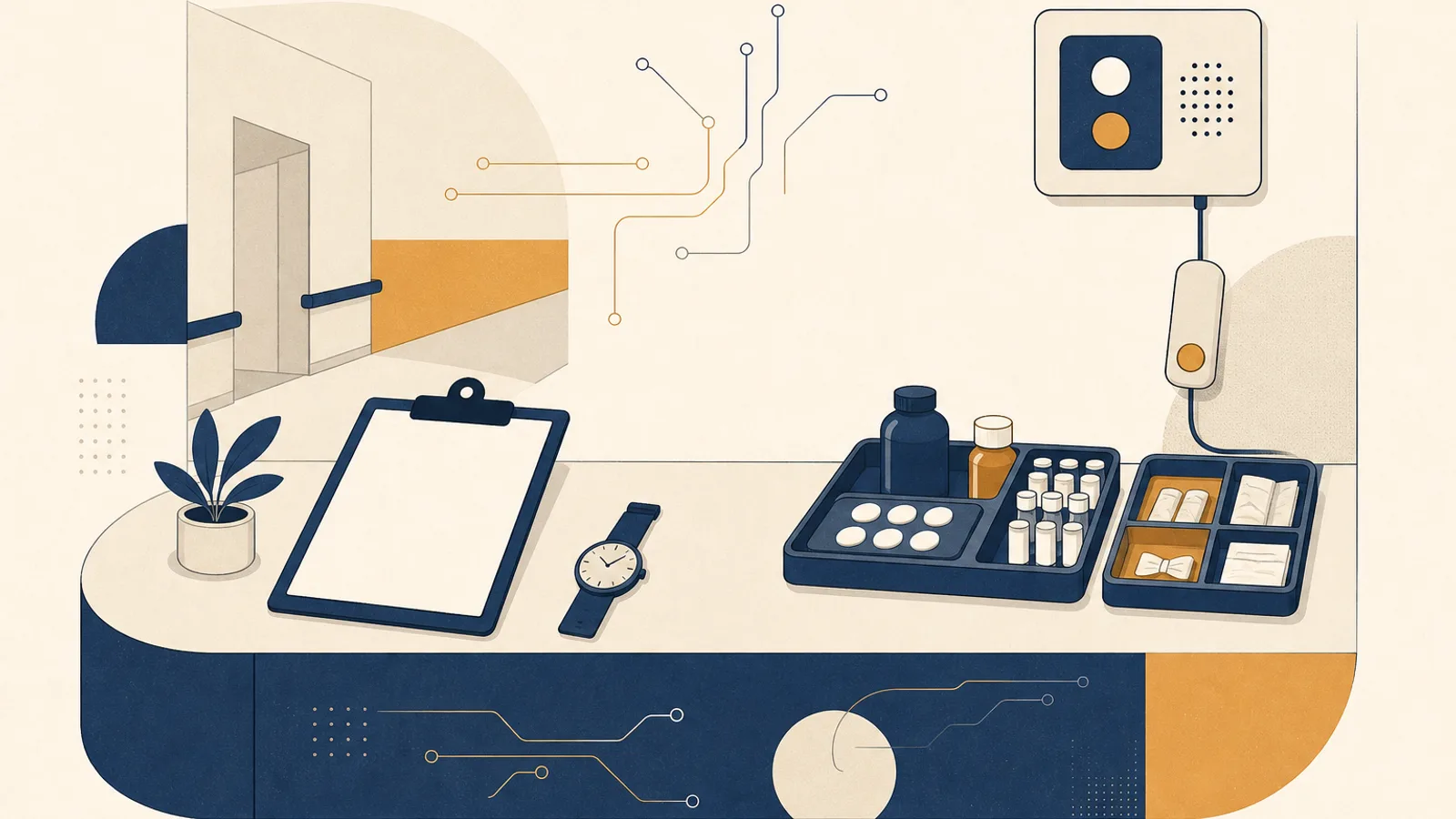
A nurse combines clinical care, coordination, and human presence; AI mainly takes over the paperwork around it.
The task split: what AI takes over and what stays yours
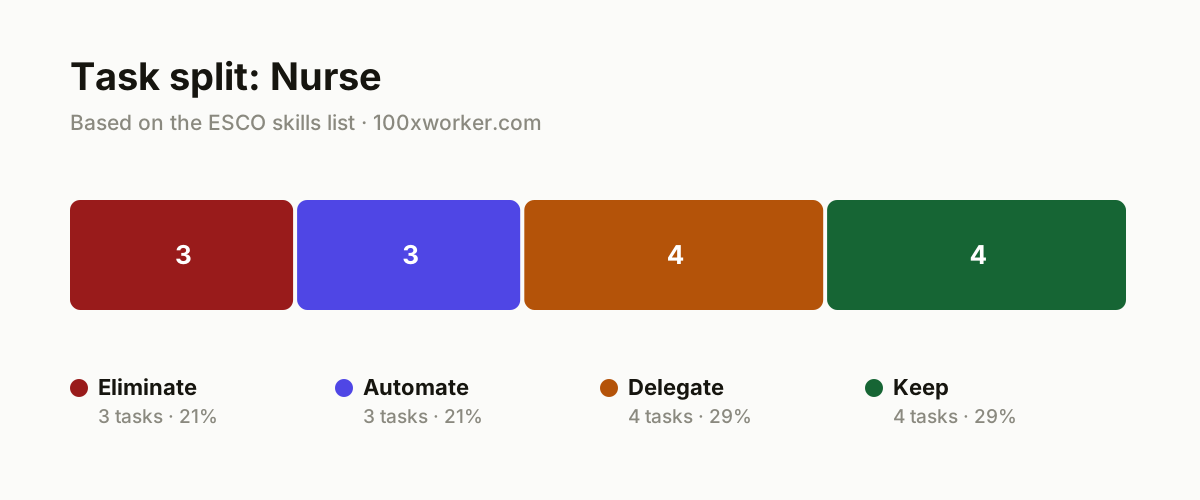
The eliminate/automate/delegate/keep framework sorts nursing tasks by how much of the work is pattern-based data handling versus physical, relational, or judgment-heavy work. Eliminate covers manual steps that better tools already make redundant. Automate covers tasks predictable enough for AI to complete without you checking every line. Delegate covers tasks where AI drafts and you review, sign off, or adjust. Keep covers tasks that depend on your hands, your presence, or your judgment in the room, which no model can substitute.
| Task | Bucket | Why |
|---|---|---|
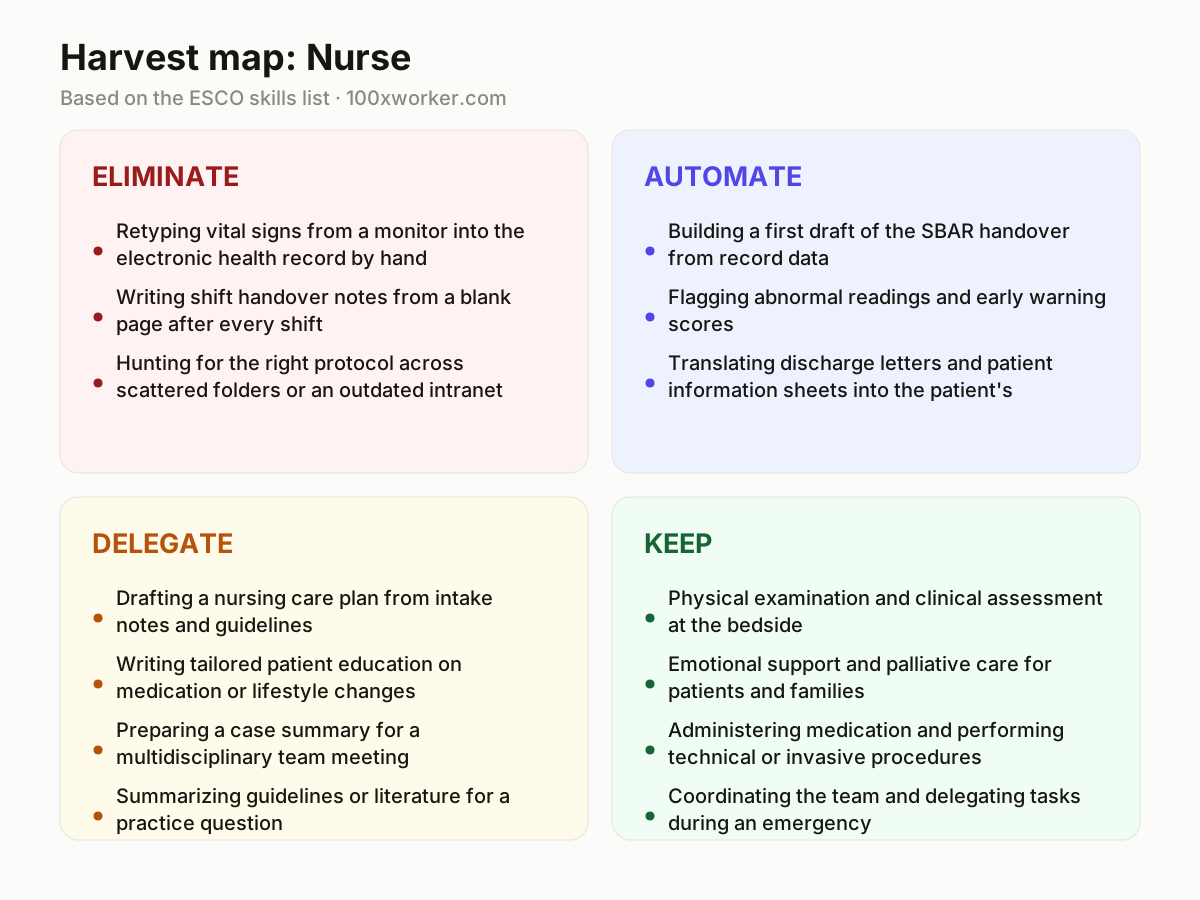
| Retyping vital signs from a monitor into the electronic health record by hand | eliminate | Devices and the record system can already connect directly. Manual retyping only adds a chance for errors. |
| Writing shift handover notes from a blank page after every shift | eliminate | The data already sits in the record. AI turns it into a readable handover in seconds. |
| Hunting for the right protocol across scattered folders or an outdated intranet | eliminate | A searchable knowledge base with AI finds the right document faster than you can by hand. |
| Building a first draft of the SBAR handover from record data | automate | The structure and inputs are predictable enough to generate automatically, start to finish. |
| Flagging abnormal readings and early warning scores | automate | Spotting patterns in numeric trends is exactly what monitoring systems and language models handle well. |
| Translating discharge letters and patient information sheets into the patient's language | automate | Translation does not require clinical judgment and is well suited to full automation. |
| Drafting a nursing care plan from intake notes and guidelines | delegate | AI produces a strong first draft. You check it against the patient and sign off. |
| Writing tailored patient education on medication or lifestyle changes | delegate | The text comes together quickly. The conversation and follow-up stay with you. |
| Preparing a case summary for a multidisciplinary team meeting | delegate | AI gathers and organizes the record data. You decide what matters for the discussion. |
| Summarizing guidelines or literature for a practice question | delegate | A summary saves search time. The clinical judgment call stays with you. |
| Physical examination and clinical assessment at the bedside | keep | Touch and direct observation give you information no screen can pass along. (Your edge: You see and feel things no dataset captures.) |
| Emotional support and palliative care for patients and families | keep | Fear, grief, and hope call for presence, not generated text. (Your edge: Presence and comfort are hard to automate.) |
| Administering medication and performing technical or invasive procedures | keep | The physical execution requires hand skill and direct accountability. (Your edge: Legal responsibility for administration stays with you.) |
| Coordinating the team and delegating tasks during an emergency | keep | Leadership under time pressure calls for human judgment, not generated advice. (Your edge: Deciding under time pressure requires human judgment.) |
What tasks will AI take over from nurses?
AI takes over the parts of nursing that are repetitive data handling: retyping vitals, drafting handover notes from existing records, translating discharge paperwork, and flagging abnormal readings in vital-sign trends. These are pattern-based, low-judgment steps. Microsoft Research found generative AI applicable to just 12.2% of a nurse's overall activities, concentrated almost entirely in documentation and information retrieval rather than in bedside care, medication administration, or emergency response.
Will AI replace nurses?
No. Nursing scored among the lowest of all occupations Microsoft Research studied for AI applicability, at 12.2%, far below roles like translation at 49%. Anthropic's Economic Index shows the same pattern across health care generally: AI shows up more as an assistant on a task than as a full replacement for it. Physical examination, medication administration, emotional support, and leading a team during a crisis all depend on presence, hands, and judgment that a chatbot cannot supply. What changes is the shape of your task list, not whether the role exists.
What can you do this month to start using AI in your nursing work?
Start small and low-risk. Pick one recurring administrative task, such as drafting shift handover notes or summarizing a guideline for a recurring clinical question, and try an AI tool your employer has approved. Always review the output against the patient record before using it. Ask your ward manager which AI tools are already sanctioned for documentation support. Keep a personal note of where AI saved you time versus where it produced something you had to correct, so you can build a realistic sense of where it actually helps.
Can AI decide on medication or care plans?
No. AI can draft a first version of a care plan from intake notes or summarize dosing guidelines, but the decision to prescribe, adjust, or administer medication stays with a licensed clinician. Legal and clinical accountability for medication administration and care planning sits with you, not with a tool. Treat AI-generated drafts the way you would treat a note from a junior colleague: useful as a starting point, but requiring your own clinical check before it becomes part of the patient's actual care.
Generative AI applies to just 12.2% of a registered nurse's work activities, one of the lowest applicability scores of any occupation studied, versus 49% for translators.
Microsoft Research, Working with AI: Measuring the Applicability of Generative AI to Occupations (2025)
Become the AI person on your team
Let AI draft, you verify
Use AI to produce a first-pass SBAR handover or care plan draft from the record, then check it against what you actually observed at the bedside. This cuts documentation time without moving clinical judgment off your desk.
Use AI as a second set of eyes on trends
Feed AI monitoring tools abnormal vital-sign patterns and early warning scores as a screening layer, not a diagnosis. You still decide what action the flagged pattern calls for.
Reserve your time for what only you can do
As documentation and translation tasks shrink, protect the time freed up for bedside assessment, patient conversations, and emergency coordination rather than letting it get absorbed by more administrative work.
Want this for your actual task list?
The free scan on the homepage builds your personal task map in 30 seconds, based on your role and industry.
Run the free task scanTools for this work
| Tool | For which tasks | The sober take |
|---|---|---|
| EHR-integrated ambient documentation assistants | Eliminating manual vitals entry and drafting shift handover notes | Only useful if your hospital's record system supports the integration; check with IT before adopting one informally. |
| Clinical guideline summarization tools | Summarizing literature or guidelines for a practice question (delegate) | Treat the summary as a starting point, not a substitute for reading the source guideline. |
| Translation tools for discharge materials | Translating discharge letters and patient education sheets (automate) | Works well for routine phrasing but have a human check clinical terms before handing it to a patient. |
| Early warning score monitoring systems | Flagging abnormal readings (automate) | These are decision-support tools, not decision-makers; the escalation call stays with the nurse. |
Prompts to try today
Draft an SBAR handover
Summarize a guideline for a practice question
Write patient education on a medication
Related jobs
Frequently asked questions
Is nursing at high risk of automation?
No. Microsoft Research's applicability score, based on 200,000 real Copilot conversations, puts registered nurses at 12.2%, near the bottom of every occupation studied. This is far below roles like translation (49%). The task mix in nursing, heavy on physical care, judgment, and human contact, is not the kind of work generative AI handles well.
What is the difference between AI automating a nursing task and AI augmenting it?
Automation means AI completes a task with little or no human review, such as translating a discharge letter. Augmentation means AI assists while you stay in control, such as drafting a care plan you then check and sign. Anthropic's Economic Index, which classifies real chatbot conversations against standardized occupational tasks, finds augmentation-style use far more common across health care than full automation.
Which nursing tasks should I stop doing by hand first?
Start with anything purely administrative and repetitive: manually retyping vitals from a monitor into the record, writing handover notes from scratch when the data already exists, and searching scattered files for a protocol. These are the tasks with the clearest AI applicability and the lowest clinical risk if the tool gets something wrong, since you review the output before it becomes part of the patient's record.
Should I worry about AI making clinical decisions for me?
AI tools can draft a care plan, summarize a guideline, or flag an abnormal reading, but decision-making authority and accountability for medication, treatment, and care planning remain with the licensed clinician. No credible tool or framework in the current evidence base assigns clinical decision authority to AI in nursing. Treat any AI output as a draft that needs your clinical check, not a finished decision.
Sources
- Microsoft Research, Working with AI: Measuring the Applicability of Generative AI to Occupations (2025)
- Anthropic Economic Index
- Eurostat, Digital Economy and Society Statistics (isoc_ai_iaiu)
- ESCO, European Commission, occupation profile: nurse responsible for general care
Hendrik De Winne, author of Becoming AI-Savvy, founder of VibeLab. Helps teams redesign their work with AI.
This article was drafted with AI assistance from public data sources and editorially reviewed.