100×worker · job analysis
Will AI Replace Physiotherapists? What Actually Changes
Physiotherapy sits low on the list of jobs generative AI can meaningfully touch. Microsoft Research analyzed 200,000 real Copilot conversations and scored occupations by how much of their work AI can plausibly help with. Physical Therapists, the closest US category to physiotherapist, landed at 17.2%. Translators topped the list at 49%, nurses sat at 12%. That gap tells you something: jobs built around live physical contact and moment-to-moment judgment don't map well onto a text-generating tool.
But 17.2% is not zero. The ESCO taxonomy, maintained by the European Commission, lists well over 100 distinct skills under the physiotherapist profile, from therapeutic massage to managing clinical risk to writing referral letters. Some of those skills are pure paperwork. Others require hands on a body. This article splits the job at that seam.
The goal here is not to guess at layoffs. It's to walk through the actual task list a physiotherapist handles in a normal week and sort it into what disappears, what a system now does for you, what you can hand to AI as a first draft, and what stays entirely yours.
A physiotherapist restores and maintains movement and physical function; AI mainly supports the paperwork and writing tasks around that work.
The task split: what AI takes over and what stays yours
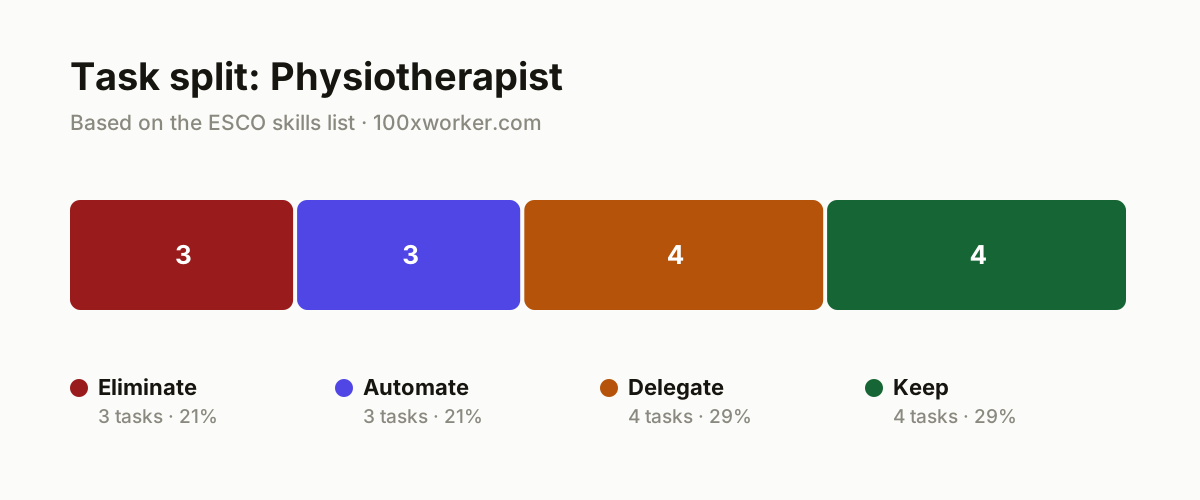
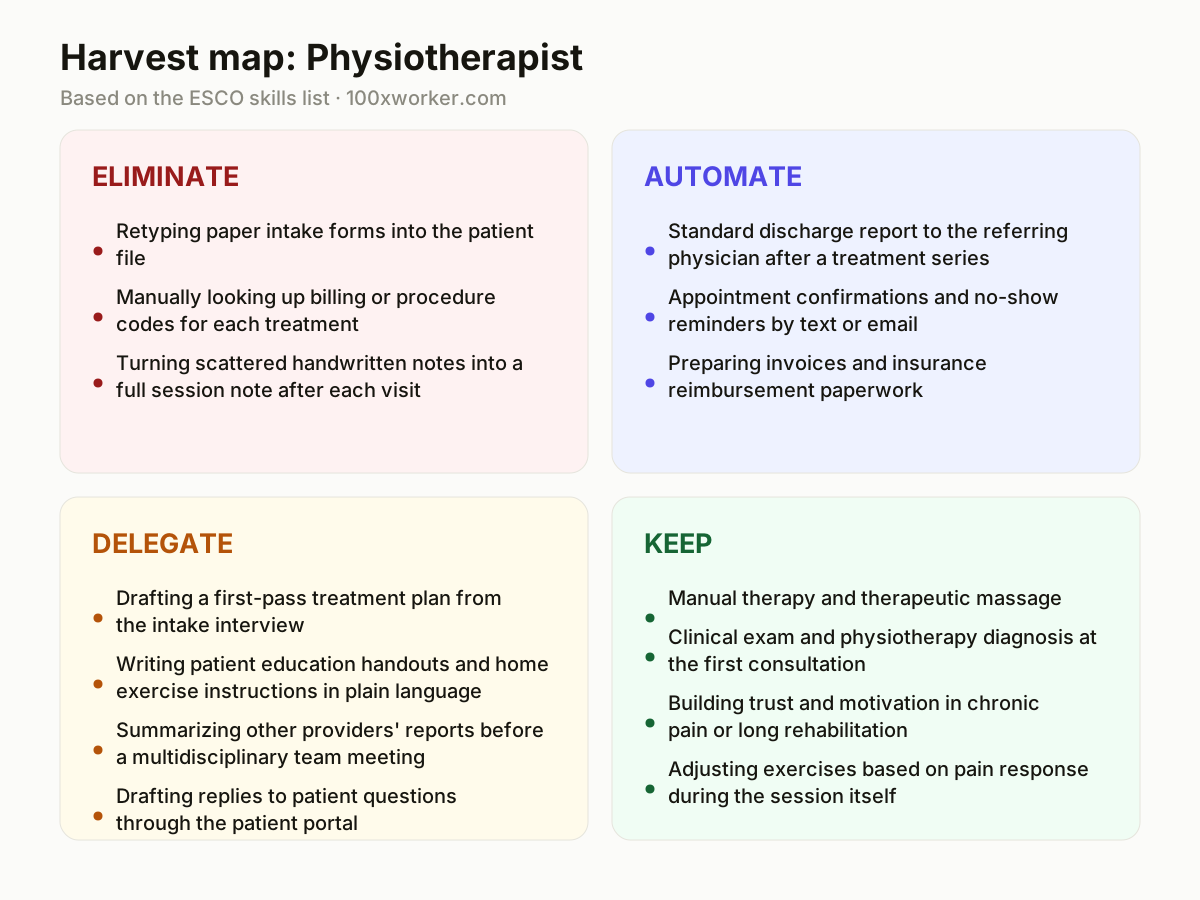
Every task a physiotherapist does falls into one of four buckets. Eliminate: work that disappears once systems talk to each other directly, no AI decision involved. Automate: repetitive, rule-based tasks a system now completes without you checking each one. Delegate: tasks where AI drafts a first version and you review it before it goes anywhere. Keep: tasks that need a body in the room, a trained eye, or a human relationship, and stay fully yours.
| Task | Bucket | Why |
|---|---|---|
| Retyping paper intake forms into the patient file | eliminate | Digital intake forms flow straight into the record, so manual retyping serves no purpose anymore. |
| Manually looking up billing or procedure codes for each treatment | eliminate | Software matches diagnosis and treatment to the correct code automatically, no lookup needed. |
| Turning scattered handwritten notes into a full session note after each visit | eliminate | Speech-to-text converts spoken notes into a readable session note right away. |
| Standard discharge report to the referring physician after a treatment series | automate | An AI agent fills the fixed template with objective measures, like range of motion and pain scores, pulled straight from the file. |
| Appointment confirmations and no-show reminders by text or email | automate | Rule-based and generative agents already send these without you, and the wording reads more naturally now. |
| Preparing invoices and insurance reimbursement paperwork | automate | Fixed rules and repeated steps make this a good fit for full automation without a human checkpoint. |
| Drafting a first-pass treatment plan from the intake interview | delegate | AI drafts a plan from intake data, you check it against your clinical judgment and adjust. |
| Writing patient education handouts and home exercise instructions in plain language | delegate | AI produces a first draft in patient-friendly language, you check medical accuracy and tone. |
| Summarizing other providers' reports before a multidisciplinary team meeting | delegate | AI reads long files quickly, you verify what's clinically relevant for this patient. |
| Drafting replies to patient questions through the patient portal | delegate | AI prepares a correct first response, you adjust tone and detail per patient. |
| Manual therapy and therapeutic massage | keep | Physical contact and reading tissue quality by feel require hands, not an algorithm. (Your edge: Hands that feel tissue tension and pain response live, AI feels nothing.) |
| Clinical exam and physiotherapy diagnosis at the first consultation | keep | Requires live observation of movement, posture, and pain response in the treatment room. (Your edge: The trained eye that spots compensation patterns the instant someone moves.) |
| Building trust and motivation in chronic pain or long rehabilitation | keep | Adherence depends on empathy and adjusting to the person, not a written text. (Your edge: Encouraging someone at the exact moment an exercise hurts.) |
| Adjusting exercises based on pain response during the session itself | keep | Real-time adjustment of load and technique requires physical presence in the moment. (Your edge: Feeling when a patient compensates before they notice it themselves.) |
What tasks can AI take over from a physiotherapist?
AI is strongest on the paperwork layer: turning session notes into discharge letters, drafting patient handouts, summarizing referral files before a team meeting, and handling billing or appointment reminders. Microsoft Research puts overall AI applicability for the closest US occupation category at 17.2%, meaning most of the job stays outside AI's reach. The clinical core, exam, diagnosis, manual therapy, and real-time exercise correction, requires a body in the room and stays with you. Treat AI as a drafting and admin layer, not a clinical decision-maker.
Will AI replace physiotherapists?
No. Physiotherapy depends on physical contact, live observation of movement, and adjusting technique to a patient's pain response second by second. Microsoft Research's applicability score of 17.2% for Physical Therapists sits closer to nursing (12%) than to text-heavy jobs like translation (49%), because the work can't be reduced to language processing. AI changes the task list around the treatment, drafting reports, summarizing files, handling admin, but it doesn't replace the hands-on assessment and treatment itself. The job shifts, it doesn't disappear.
How do you become the AI person in your physiotherapy practice?
Start by owning one repetitive task and fully automating it, like discharge letters or appointment reminders, so colleagues see a concrete result. Document which prompts and templates actually save time and share them with the practice instead of keeping them to yourself. Volunteer to test new features in your practice management or documentation software before a full rollout. Being the person who already knows what works, and what to avoid, gives you influence over how AI gets adopted in your clinic.
What can you do this month to start using AI?
Pick one recurring paperwork task, discharge reports or patient handouts work well, and test an AI draft against three real cases. Check accuracy against your own notes before trusting the format. Ask your practice management software vendor what automation it already includes for billing and reminders, since you may already be paying for tools you're not using. Set a rule for yourself: AI drafts, you verify medical content, every time, before anything goes to a patient or a referring physician.
Physical Therapists show one of the lowest generative AI applicability scores measured, 17.2 percent, against 49 percent for translators and 12 percent for nurses.
Microsoft Research, Working with AI (2025)
Become the AI person on your team
Pilot one AI-drafted document type
Pick discharge reports or patient handouts and run them through an AI draft for two weeks. Compare time saved against errors caught, then decide whether to keep it.
Build a prompt library for your clinic
Save the prompts that worked for handouts, referral summaries, and portal replies in a shared document. This turns your individual trial-and-error into something the whole practice can reuse.
Check what your existing software already automates
Many practice management and EHR systems already include billing automation and reminder scheduling. Ask your vendor directly instead of assuming you need a new tool.
Want this for your actual task list?
The free scan on the homepage builds your personal task map in 30 seconds, based on your role and industry.
Run the free task scanTools for this work
| Tool | For which tasks | The sober take |
|---|---|---|
| Ambient documentation tools (AI scribes) | Eliminate: retyping notes; Delegate: drafting session and discharge notes | Check the output against your own shorthand before it becomes the permanent record. |
| Practice management software with billing automation | Automate: invoicing, insurance paperwork, appointment reminders | Most physiotherapy practice software already includes this, check your current system before buying something new. |
| General-purpose AI writing assistants | Delegate: patient handouts, referral summaries, portal replies | Useful for a first draft, not for anything involving new symptoms or clinical red flags. |
| Speech-to-text apps for clinical notes | Eliminate: manual write-up of session notes | Works well for routine sessions, still needs a quick read-through for accuracy. |
Prompts to try today
Draft a home exercise handout
Summarize a referral file before a team meeting
Turn session notes into a discharge report
Related jobs
Frequently asked questions
How does AI applicability for physiotherapists compare to other healthcare jobs?
Microsoft Research scored Physical Therapists at 17.2% applicability, close to nurses at 12% and far below translators at 49%. Both physiotherapy and nursing depend on physical presence, hands-on assessment, and reading a patient's condition in real time, which limits how much a text-based AI tool can help. Administrative-heavy roles score much higher because more of their daily work is language processing that AI already handles well.
What is the difference between AI automation and AI augmentation for this job?
Anthropic's Economic Index classifies AI use against real task data and splits it into automation-like use, where AI completes a task with little human input, and augmentation-like use, where AI assists a person who stays in control. For physiotherapists, most realistic AI use falls into augmentation: drafting reports, summarizing files, or preparing patient materials that a clinician still reviews and finalizes before it's used.
Should I trust the old 'robotization percentage' figures I see online for physiotherapists?
Be careful with those numbers. The widely cited robotization percentages on many sites come from Frey and Osborne's 2013 Oxford study, published before large language models existed. It measured a different kind of automation risk and doesn't reflect how generative AI actually works today. Use more recent, task-based data like Microsoft Research's 2025 applicability scores instead.
How many people already use generative AI at work in Europe?
Eurostat found that 32.7% of the EU population aged 16 to 74 used generative AI in the three months before being surveyed in 2025. That means a large share of colleagues, referring physicians, and patients you interact with are already familiar with AI tools, even if your own clinical work stays largely hands-on.
Sources
- Microsoft Research, Working with AI: Measuring the Applicability of Generative AI to Occupations (2025)
- Anthropic Economic Index
- Eurostat, Use of generative artificial intelligence (isoc_ai_iaiu)
- ESCO, European Commission
Hendrik De Winne, author of Becoming AI-Savvy, founder of VibeLab. Helps teams redesign their work with AI.
This article was drafted with AI assistance from public data sources and editorially reviewed.