100×worker · job analysis
Will AI Replace Midwives, and What Should You Do About It?
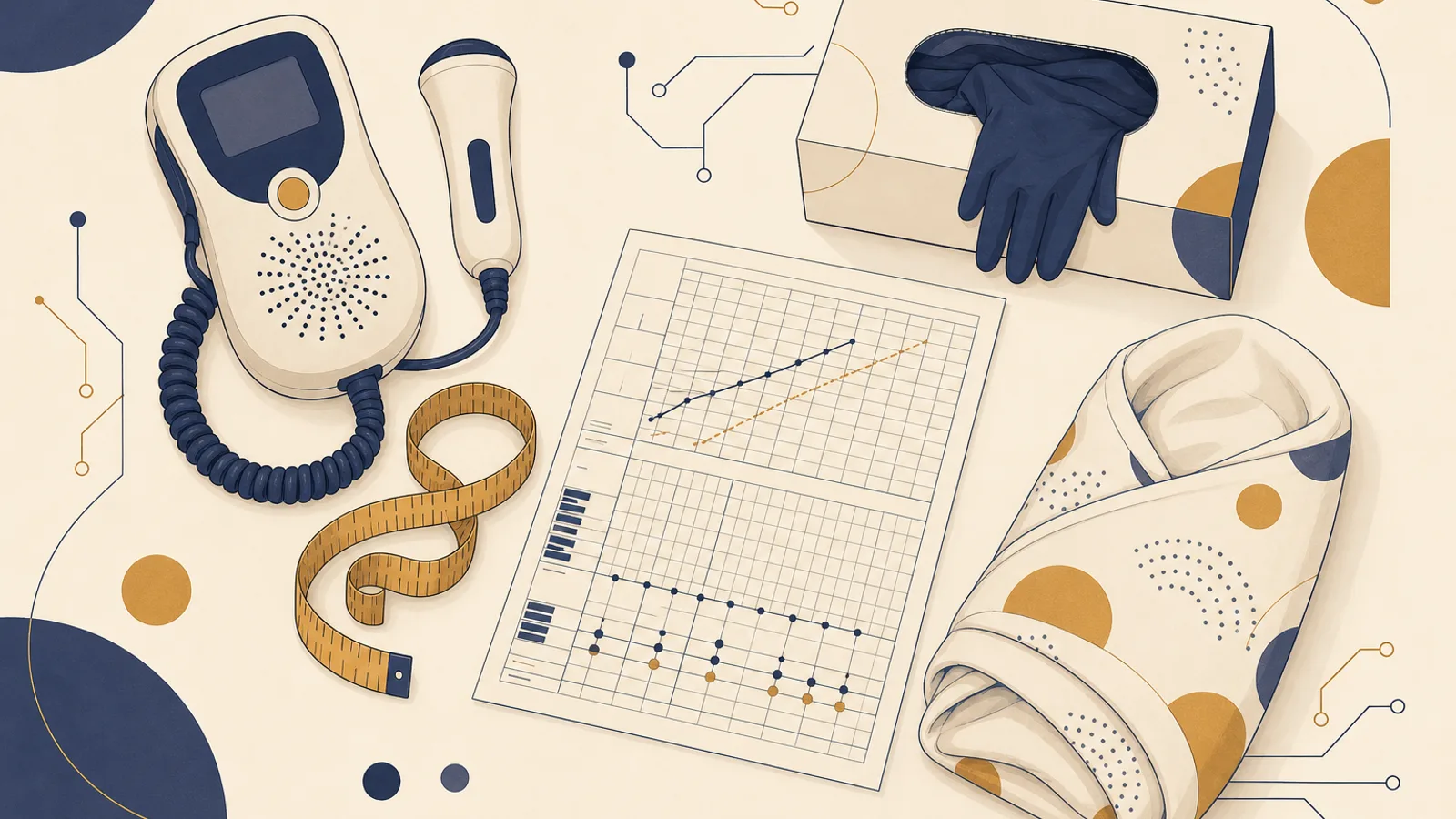
Midwives spend their days moving between paperwork and hands-on care: checking a partogram, calming a frightened first-time mother, resuscitating a newborn who doesn't cry right away. Only some of that work touches a keyboard, and that is exactly why AI's reach into this profession is limited.
Microsoft Research analyzed 200,000 real conversations with its Copilot assistant and scored how applicable generative AI is to hundreds of occupations. Nurse midwifery roles scored 12.5%, near the bottom of the scale, far below translators at 49% (Microsoft Research, Working with AI, 2025). That does not mean nothing changes. It means the change is concentrated in documentation, communication, and administration, not in clinical judgment or physical care.
This article breaks the job down task by task: what disappears, what gets automated, what you delegate to an AI tool with a human check, and what stays entirely yours.
A midwife guides pregnancy, birth, and postpartum care; AI mainly supports documentation and paperwork around it.
The task split: what AI takes over and what stays yours
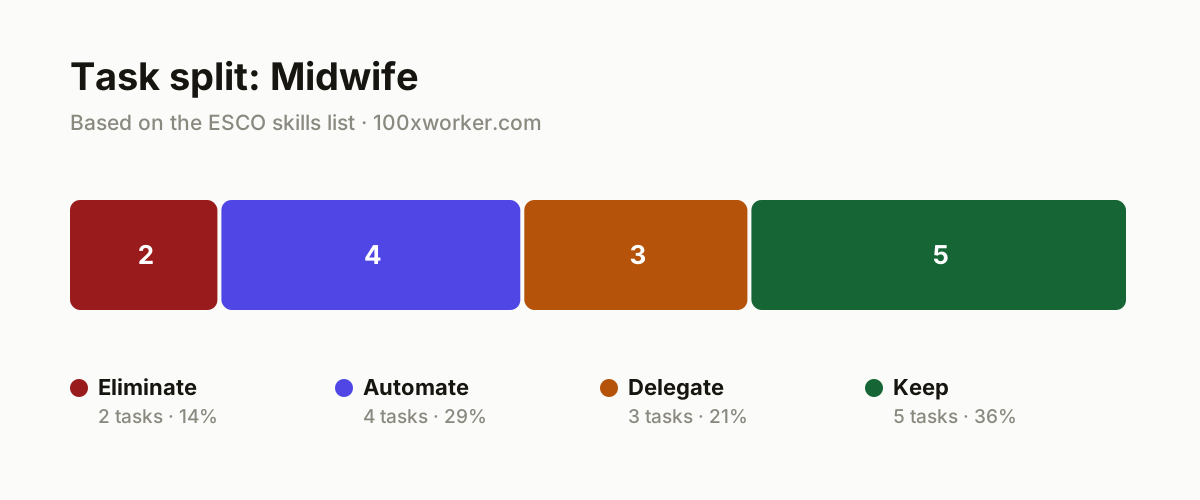
We sort midwifery tasks into four groups: eliminate (tasks that disappear once you stop duplicating work), automate (tasks a system can run without you watching), delegate (tasks an AI tool drafts and you finish or approve), and keep (tasks that stay with you because they need a body in the room, a hand on a belly, or a human presence in a hard moment).
| Task | Bucket | Why |
|---|---|---|
| Double-entering patient data across the hospital EHR, your own calendar, and a paper partogram | eliminate | One accurate entry is enough; retyping the same data twice only creates more room for error. |
| Drafting a standard referral or discharge letter from scratch every time | eliminate | A template that pulls fields from the record produces the same letter faster and more consistently. |
| Sending reminders for prenatal checkups and vaccinations | automate | A system schedules and sends these automatically based on gestational age, no manual tracking needed. |
| Transcribing consultation conversations into structured chart notes | automate | Speech-to-text with summarization saves typing time after every visit. |
| Drafting patient materials on breastfeeding, nutrition, or postpartum care, tailored to language and reading level | automate | An AI tool generates the base text; you only need to personalize it. |
| Summarizing a multidisciplinary team meeting | automate | A transcript is automatically converted into action items for each care provider involved. |
| Drafting a birth plan based on intake information | delegate | AI structures preferences and scenarios; you review and revise it together with the pregnant woman. |
| Preparing educational material on contraception and family planning for a specific case | delegate | AI produces a first, general version; you add the personal, case-specific advice. |
| Flagging routine measurements (blood pressure, weight, growth curve) when they fall outside normal range | delegate | AI flags what deviates from the norm; you decide what it means clinically. |
| Supporting the birth itself, spontaneous labor and pushing | keep | This requires physical presence and real-time action. (Your edge: Presence and hands-on judgment at the moment itself.) |
| Resuscitation and emergency response for complications in mother or baby | keep | Life-threatening situations require immediate physical intervention, with no time to wait. (Your edge: Deciding and acting within seconds, with no second attempt.) |
| Emotional support and difficult conversations with the woman and her family | keep | Loss, complications, or fear require empathy that no template captures. (Your edge: Caring in a way that feels genuine.) |
| Physical examination: assessing fetal position and cervical dilation | keep | This requires hands-on clinical skill that cannot be replaced digitally. (Your edge: Hands that feel what a screen cannot show.) |
| Building trust throughout the whole care pathway, from intake to postnatal check | keep | Continuity and recognition build trust; a single isolated contact point does not. (Your edge: A familiar face and voice the pregnant woman already knows.) |
Which tasks of a midwife does AI take over?
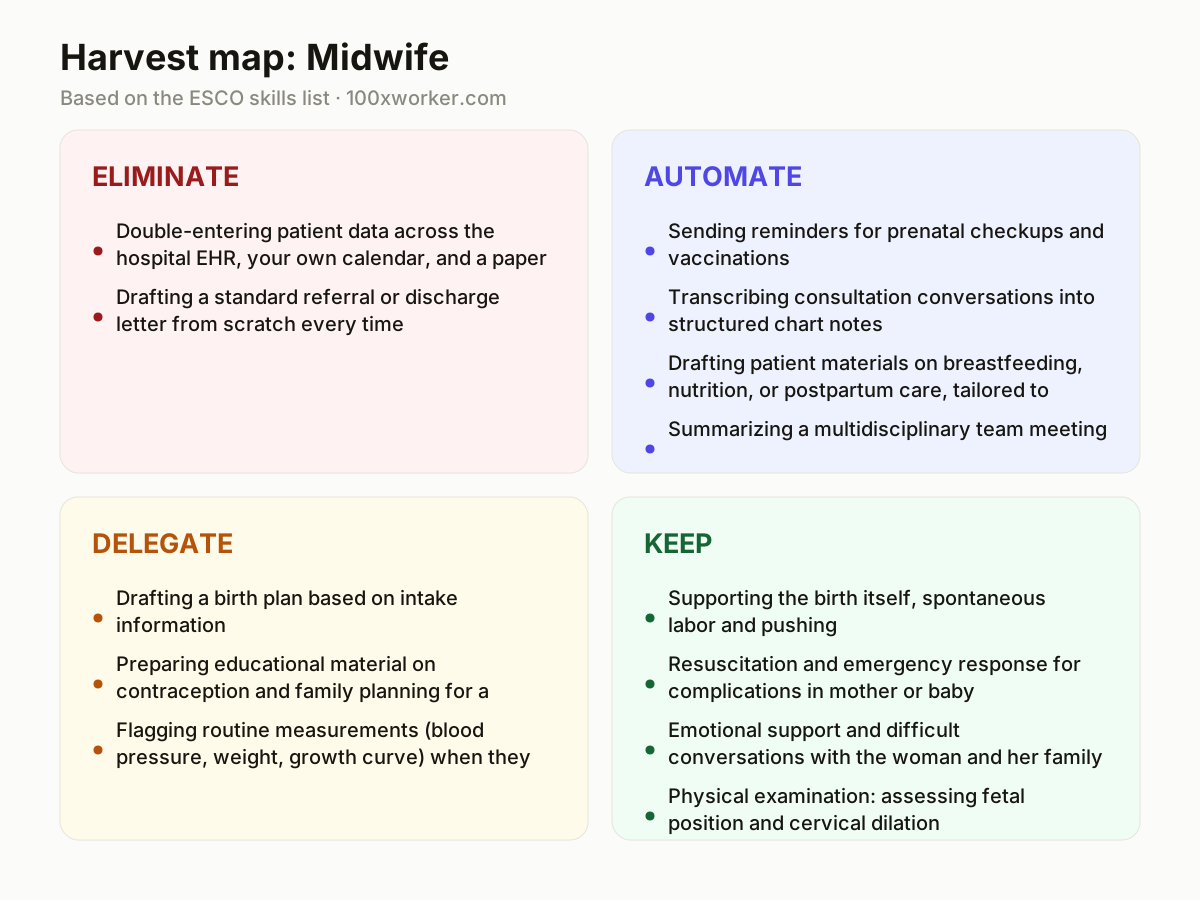
AI mainly takes over the paperwork layer around care, not the care itself. That includes double data entry between an EHR, a calendar, and paper notes; standard referral and discharge letters; transcribing consultations into chart notes; drafting patient education material on breastfeeding or postpartum care; and summarizing multidisciplinary team meetings into action points. All of these are administrative or documentation tasks with a clear input and output. None of them involve touching a patient or making a clinical judgment call, which is why they sit in the eliminate and automate buckets rather than anywhere near the delivery room.
Will AI replace midwives?
No. Microsoft Research's applicability study, based on 200,000 real Copilot conversations, scored nurse midwifery roles at 12.5%, one of the lowest of any occupation measured, far below translators at 49% (Microsoft Research, 2025). The reason is structural: attending a birth, performing resuscitation, and assessing cervical dilation by touch are physical, time-critical, hands-on tasks that no language model can perform. What AI changes is the paperwork and communication layer around those tasks, not the tasks themselves. The job shrinks in administrative hours and stays the same in clinical and emotional hours.
How do you become the AI person on your midwifery team or unit?
Start by mapping which documentation tasks eat the most time on your team, letters, transcription, patient handouts, and pick one to fix first. Pilot a speech-to-text or dictation tool for consult notes with a colleague, then share what worked at a team meeting. Build a shared library of AI-drafted templates for common letters and education material so nobody starts from a blank page. Offer to be the point person who tests new tools before they go unit-wide, and keep a short log of what saved time versus what needed heavy editing. That log becomes your evidence when advocating for adoption.
What can you do this month with AI as a midwife?
Pick one recurring document, a discharge letter or a breastfeeding handout, and build a template with an AI tool that pulls from your usual intake fields. Try dictating one consult note into a transcription tool instead of typing it and compare the time saved. Ask an AI assistant to draft a first version of patient education material in a second language your practice serves, then edit it yourself. Do not touch anything involving diagnosis, medication, or emergency protocols; keep those fully manual and fully yours.
Generative AI's applicability ranges from 49% for translators to 12% for nurses, depending on how much of the job is language work versus physical, hands-on work.
Microsoft Research, Working with AI (2025)
Become the AI person on your team
Run a one-week documentation audit
Track every letter, note, and summary you write for a week and note how long each takes. This gives you a concrete list of candidates for automation instead of a vague sense that 'paperwork takes too long'.
Pilot before you propose
Test a transcription or template tool yourself for two weeks before suggesting it to your team or manager. Bring a before-and-after time comparison rather than a general recommendation.
Keep a shared prompt and template library
Save the AI prompts and templates that worked well for letters, handouts, and meeting summaries in a shared folder. This turns individual experiments into a resource the whole team can reuse.
Want this for your actual task list?
The free scan on the homepage builds your personal task map in 30 seconds, based on your role and industry.
Run the free task scanTools for this work
| Tool | For which tasks | The sober take |
|---|---|---|
| Ambient clinical documentation tools | Transcribing consultations into structured chart notes | Reduces typing after each visit but still needs a quick human read-through for accuracy. |
| EHR-integrated letter templates | Drafting standard referral and discharge letters | Works only as well as the data quality in the underlying record. |
| General AI chat assistants (e.g., ChatGPT, Claude) | Drafting patient education material, birth plan drafts, meeting summaries | Useful for a first draft; always review for medical accuracy and local guidelines before sharing. |
| Practice management reminder systems | Sending prenatal checkup and vaccination reminders | Set-and-forget once configured with gestational age triggers. |
Prompts to try today
Draft a discharge letter from intake notes
Generate a patient handout at a specific reading level
Summarize a multidisciplinary meeting into action items
Related jobs
Frequently asked questions
Will AI replace midwives?
No. Midwifery scored 12.5% on Microsoft Research's AI applicability scale, one of the lowest scores of any occupation studied, because the core of the job, attending births, performing resuscitation, and hands-on physical assessment, cannot be done by a language model. AI changes the paperwork and communication tasks around midwifery care, not the clinical and physical work itself.
What parts of a midwife's job will AI change first?
Documentation and communication tasks change first: transcribing consultations, drafting referral and discharge letters, generating patient education material, and summarizing team meetings. These are language-based tasks with clear inputs and outputs, which is exactly the kind of work generative AI handles well according to Microsoft Research's occupation analysis.
Can AI help with prenatal care coordination?
Yes, for the scheduling and reminder side. AI-driven systems can send appointment and vaccination reminders based on gestational age, and can draft educational materials tailored to a patient's language or literacy level. Clinical decisions, like assessing whether a pregnancy is high-risk, still require a midwife's judgment and hands-on assessment.
Should midwifery practices adopt AI tools now or wait?
Piloting low-risk tools now makes sense: dictation for chart notes, template generators for standard letters, and draft patient handouts. These save administrative time without touching clinical judgment. Anything involving diagnosis, medication, or emergency protocols should stay fully manual until tools are validated and approved through proper clinical governance.
Sources
- Microsoft Research, Working with AI: Measuring the Applicability of Generative AI to Occupations (2025)
- Anthropic Economic Index
- Eurostat, Individuals' use of AI tools (isoc_ai_iaiu)
- ESCO, European Commission occupation taxonomy
Hendrik De Winne, author of Becoming AI-Savvy, founder of VibeLab. Helps teams redesign their work with AI.
This article was drafted with AI assistance from public data sources and editorially reviewed.