100×worker · job analysis
Will AI Replace Purchasers? What Changes in Purchasing Work

Purchasing managers spend their days negotiating contracts, comparing suppliers, and keeping inventory and budgets under control. Some of that work is repetitive data handling. Some of it depends on judgment, trust, and reading a room during a negotiation. Generative AI is good at the first kind and weak at the second, which is exactly why the numbers on purchasing look different from, say, translation or customer service.
Microsoft Research analyzed 200,000 real Copilot conversations and built an AI applicability score for each occupation. Purchasing managers came in at 10.5%, meaning a small share of the tasks in the job show generative AI being used in ways that plausibly substitute for the work. That is a modest number compared to occupations like translation (49%), but it is not zero. Anthropic's Economic Index, which classifies millions of Claude conversations against O*NET task categories, similarly finds that AI use in commercial and supply-chain roles skews toward augmentation (helping with a task) rather than full automation.
This article breaks the purchasing role down task by task, using the same four-bucket approach used across this site: eliminate, automate, delegate, keep. The goal is not to predict headcount. It is to tell you which parts of your week are about to change.
A purchaser buys goods and services at the best price and manages supplier relationships and contracts.
The task split: what AI takes over and what stays yours
Not every purchasing task faces the same AI pressure. Some tasks disappear because software already does them better. Some get automated end to end by agents that monitor data continuously. Some get a first draft from AI that you still have to check and approve. And some stay entirely human because they depend on trust, negotiation, and judgment calls that no model can make for you. Sorting your own task list into these four buckets is the fastest way to see where your time actually goes next year.
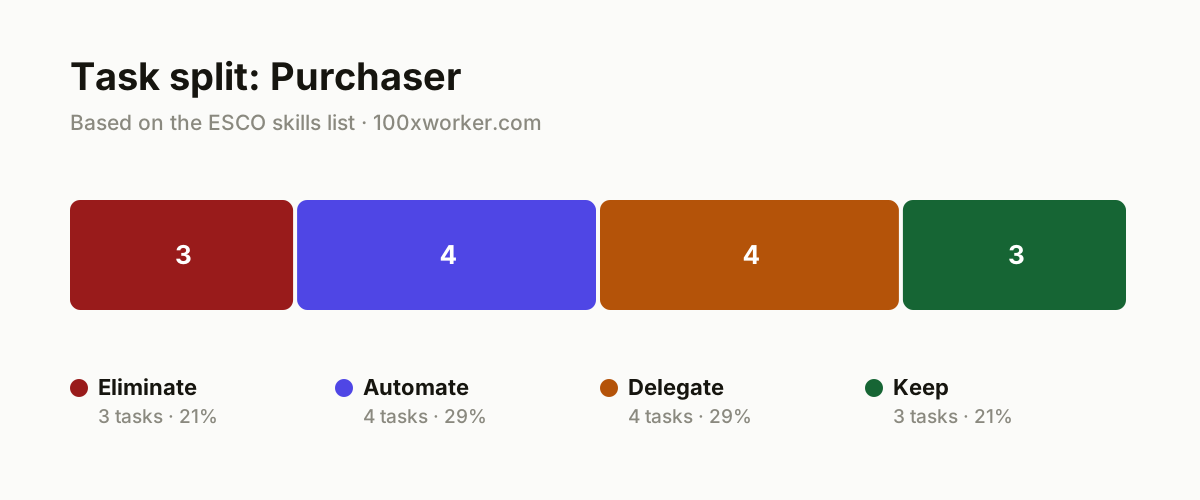
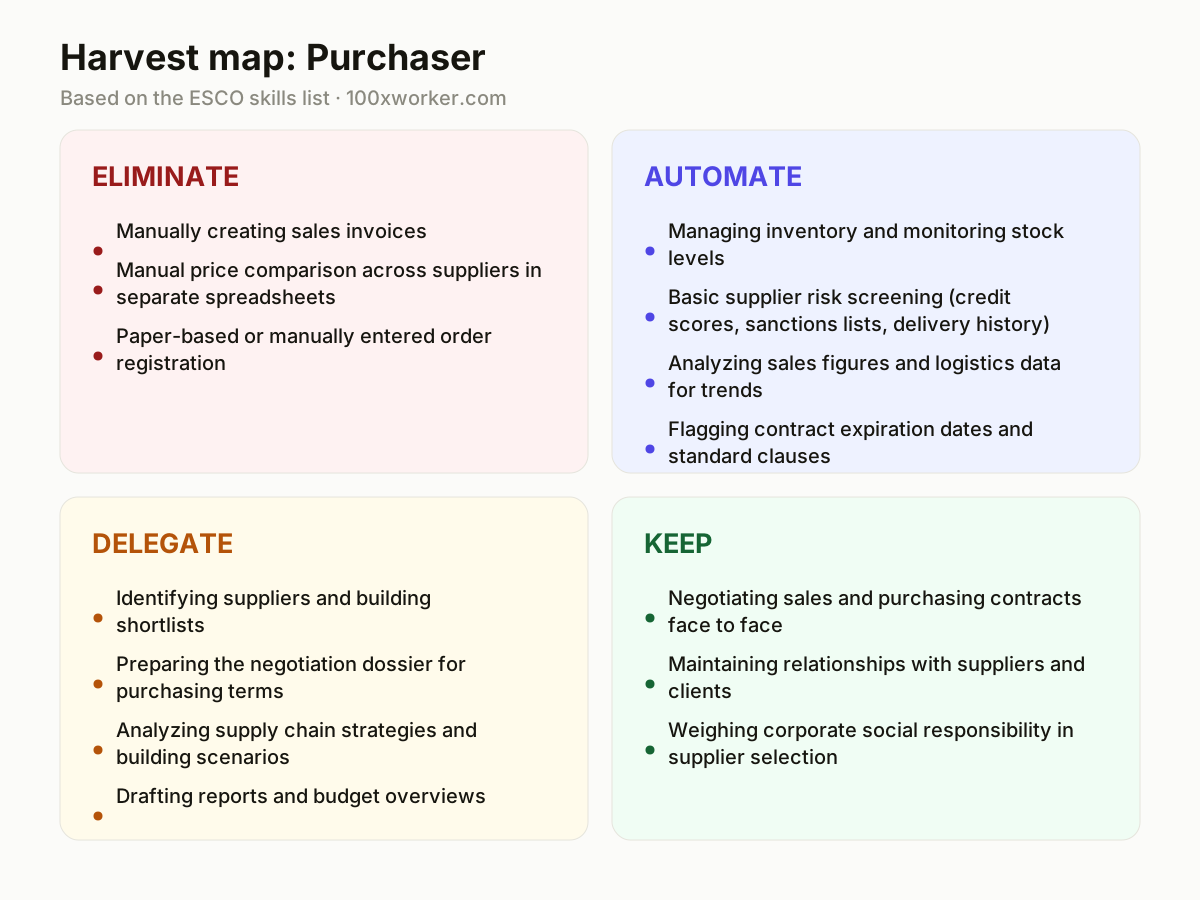
| Task | Bucket | Why |
|---|---|---|
| Manually creating sales invoices | eliminate | Purchasing software now generates invoices automatically from order data, faster and with fewer errors than manual entry. |
| Manual price comparison across suppliers in separate spreadsheets | eliminate | AI tools pull prices and terms together automatically from multiple sources in one pass. |
| Paper-based or manually entered order registration | eliminate | Integrated procurement systems log orders automatically and without transcription errors. |
| Managing inventory and monitoring stock levels | automate | Agents track stock in real time and trigger reorders without you checking a dashboard. |
| Basic supplier risk screening (credit scores, sanctions lists, delivery history) | automate | Automated screening searches databases faster and more consistently than manual checks. |
| Analyzing sales figures and logistics data for trends | automate | Large datasets are exactly where generative AI is demonstrably strong. |
| Flagging contract expiration dates and standard clauses | automate | Agents read through contracts and alert you automatically before deadlines pass. |
| Identifying suppliers and building shortlists | delegate | AI searches sources and proposes a first shortlist, you verify and choose. |
| Preparing the negotiation dossier for purchasing terms | delegate | AI supplies market benchmarks and talking points, you set the strategy at the table. |
| Analyzing supply chain strategies and building scenarios | delegate | AI generates data-driven scenarios, you weigh the risk and decide. |
| Drafting reports and budget overviews | delegate | AI produces a first version from the numbers, you check and correct it. |
| Negotiating sales and purchasing contracts face to face | keep | Final negotiation runs on trust, timing, and human judgment that AI cannot replicate. (Your edge: You read body language and power dynamics no model can see.) |
| Maintaining relationships with suppliers and clients | keep | Long-term business relationships are built on personal contact and being recognized. (Your edge: You build trust in conversations, not in prompts.) |
| Weighing corporate social responsibility in supplier selection | keep | Ethical choices require context and company values that go beyond data. (Your edge: You are accountable internally and externally, not the model.) |
What tasks can AI take over from a purchaser?
AI is strongest on the data side of purchasing: pulling and comparing supplier prices, watching inventory levels, flagging contract deadlines, and running first-pass risk screens against sanctions lists or credit data. It also drafts first versions of reports, shortlists, and budget overviews. What it does not do well is the negotiation itself, reading a supplier's real flexibility, or deciding which trade-off fits your company's values. Microsoft Research's 10.5% applicability score for purchasing managers reflects that split: a real but limited share of the job.
Will AI replace purchasers?
No. Microsoft Research's applicability score of 10.5% for purchasing managers is far below occupations like translation (49%), meaning most purchasing tasks do not map well onto what generative AI currently does. What changes is the task mix inside the job. Data comparison, invoicing, and basic risk checks move to software. Negotiation, supplier trust, and judgment calls on ethical sourcing stay firmly with the human. The job title survives; the daily task list looks different within a few years.
How do you become the AI-savvy person on the purchasing team?
Start by feeding AI tools your supplier data and contract terms and asking for structured comparisons instead of building spreadsheets by hand. Use AI to draft the first version of negotiation prep and reports, then spend your saved time on the actual conversation with the supplier. Learn what your procurement or ERP system already automates (many now flag contract renewals and reorder points) so you are not duplicating work the software already does.
What can you do this month as a purchaser?
Pick one recurring task, like your monthly supplier price comparison, and test whether an AI tool can produce a usable first draft. Check the output against your own numbers before you trust it. Ask your procurement software vendor what automation features you are not yet using, since inventory monitoring and contract-deadline alerts are often already available but switched off. Block time freed up this way for supplier calls, not more spreadsheet work.
AI doesn't change your job title, it changes your task list.
UWV, based on a survey of 2,300 employers
Become the AI person on your team
Turn spreadsheet comparisons into AI-generated summaries
Feed supplier quotes and terms into an AI tool and ask for a side-by-side comparison table with flagged discrepancies. Check the output against the source documents before sending it up the chain.
Use AI to prep, not to negotiate
Ask an AI tool to summarize a supplier's contract history, past price increases, and market benchmarks before a negotiation. Walk into the room with that prep, but make the actual counteroffers yourself.
Automate the parts nobody wants to do manually
Set up alerts for contract expiration dates and reorder thresholds inside your procurement system. This removes the manual tracking that used to eat a morning each week.
Want this for your actual task list?
The free scan on the homepage builds your personal task map in 30 seconds, based on your role and industry.
Run the free task scanTools for this work
| Tool | For which tasks | The sober take |
|---|---|---|
| SAP Ariba | Automating supplier risk screening, contract deadline tracking, and order registration | Widely used procurement suite; automation depth depends on your organization's configuration. |
| Coupa | Inventory monitoring, spend analysis, supplier data comparison | Cloud procurement platform with built-in analytics dashboards. |
| Microsoft Copilot | Drafting reports, summarizing contracts, building first-pass supplier shortlists | General-purpose assistant; check outputs against source data before using them. |
| Claude or ChatGPT (general use) | Negotiation prep, drafting budget overviews, summarizing supply chain scenarios | Useful for first drafts, not for final decisions on contracts or supplier ethics. |
Prompts to try today
Supplier comparison summary
Negotiation prep brief
Contract deadline and clause scan
Related jobs
Frequently asked questions
Which part of purchasing work is most at risk from AI?
The data-heavy, repetitive parts: manual invoicing, spreadsheet-based price comparisons, and basic supplier risk checks against public databases. These are tasks where AI tools already produce faster, more consistent results than manual work. Microsoft Research's 10.5% applicability score for purchasing managers reflects that these tasks make up a real but limited share of the overall job, not the whole role.
Do I need to learn to code to use AI in purchasing?
No. Most useful AI tools for purchasing work through plain-language prompts inside procurement software or general assistants like Copilot or Claude. What helps more is knowing your own data (supplier terms, contract history, budget figures) well enough to check whether an AI-generated summary or comparison is accurate before you act on it.
Will AI negotiate contracts for me?
AI can prepare you for a negotiation by summarizing a supplier's history, benchmarking prices, and drafting counteroffer angles. It does not conduct the actual negotiation. Reading a supplier's real flexibility, building trust over multiple conversations, and making the final call at the table remain tasks that depend on human judgment.
How is the AI applicability score for purchasing managers calculated?
Microsoft Research analyzed 200,000 real conversations with Copilot and matched them against detailed task descriptions for each occupation. The 10.5% score for purchasing managers reflects the share of the job's tasks where generative AI use showed up in ways that plausibly substitute for the work, based on that conversation data, not a theoretical estimate.
Sources
- Microsoft Research, Working with AI: Measuring the Applicability of Generative AI to Occupations (2025)
- Anthropic Economic Index
- Eurostat, Use of generative AI (isoc_ai_iaiu)
- ESCO, European Commission
Hendrik De Winne, author of Becoming AI-Savvy, founder of VibeLab. Helps teams redesign their work with AI.
This article was drafted with AI assistance from public data sources and editorially reviewed.