100×worker · job analysis
Will AI Replace Paramedics? What Changes in the Job
Paramedics work in a job built on physical action, split-second judgment, and hands-on care. That is exactly why generative AI touches so little of it. Microsoft Research analyzed 200,000 real Copilot conversations and scored occupations on how much of their work generative AI can plausibly assist. Paramedics scored 7.7%, near the bottom of the entire scale, while occupations built around drafting and translating text scored far higher.
That low score does not mean nothing changes. AI is already reshaping the paperwork layer around the job: run reports, handover briefings, billing codes, and protocol libraries. The European Commission's ESCO taxonomy lists over 50 distinct skills for this occupation (ESCO code 3258.2), and almost none of them involve typing or document formatting. The physical, clinical, and interpersonal core of the job stays with you. The administrative shell around it is where AI tools are landing first.
Across the wider workforce, adoption of generative AI keeps climbing. Eurostat reports that 32.7% of the EU population aged 16 to 74 used generative AI in the three months before being surveyed in 2025. Paramedics are not the target market for most of that usage, but the documentation tools built on the same underlying models are starting to reach ambulance services and hospital handover systems.
A paramedic delivers emergency care and transport to patients in medical emergencies, before and during transfer to a hospital.
The task split: what AI takes over and what stays yours
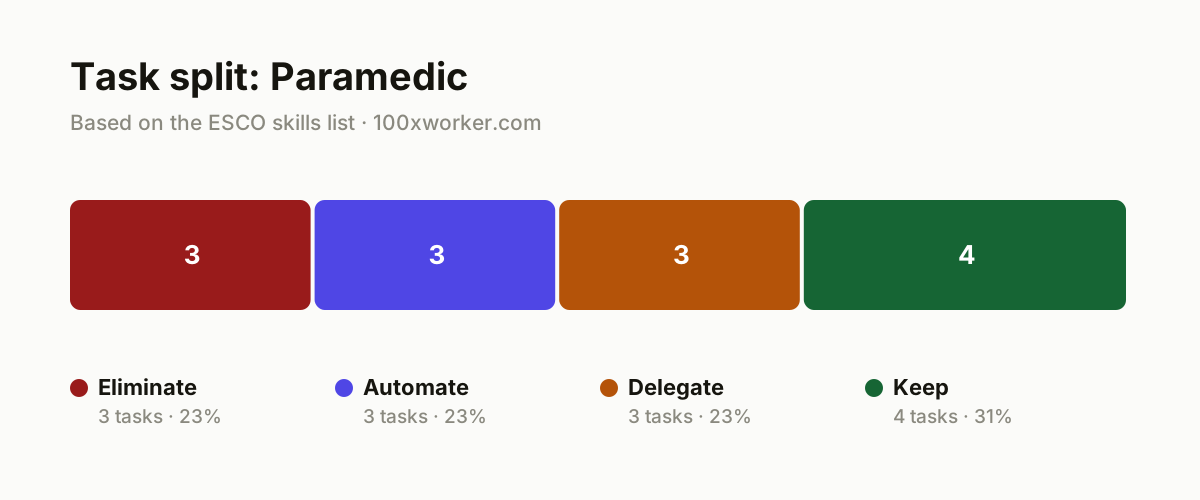
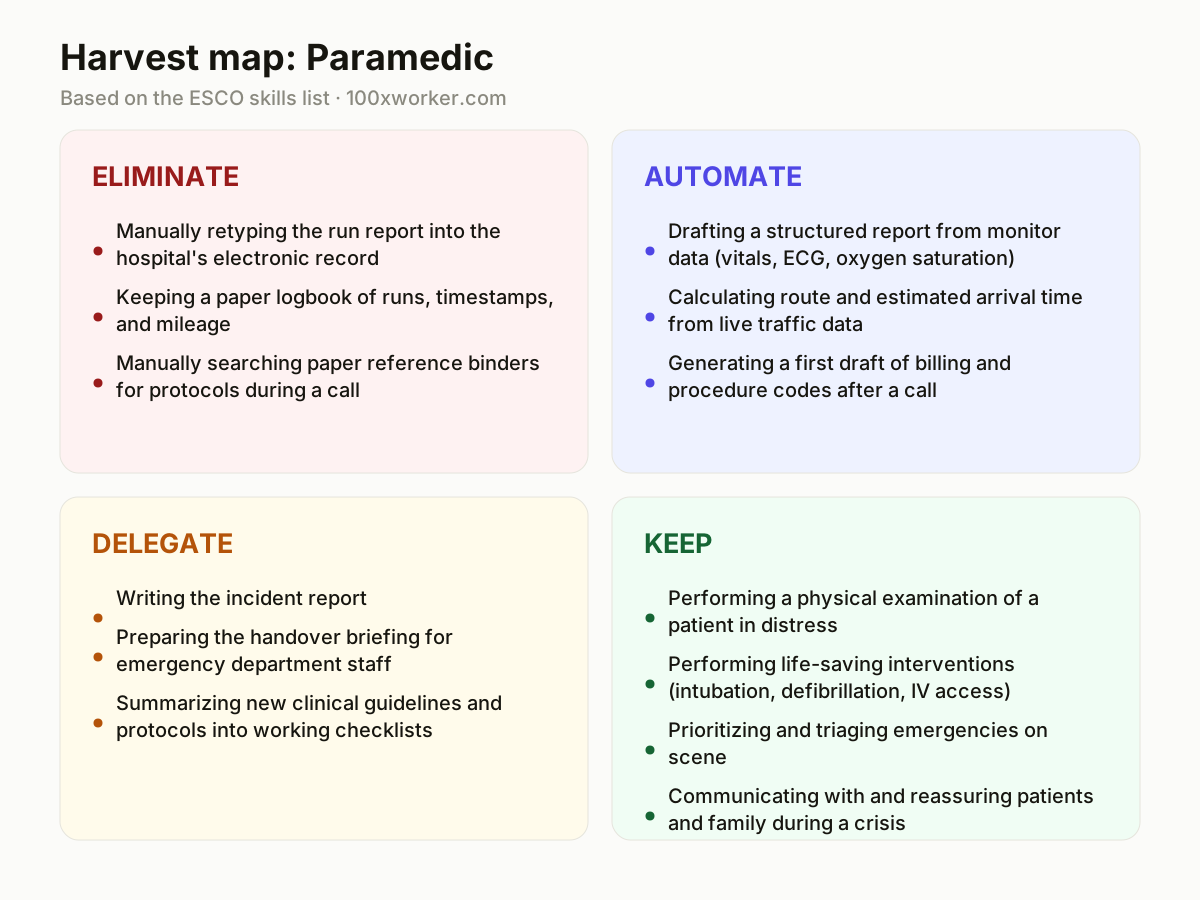
To see what AI actually changes for paramedics, split the job into four buckets: tasks that disappear because the underlying manual step is now pointless (eliminate), tasks a system now does by default (automate), tasks AI can draft while you approve and correct (delegate), and tasks that stay entirely human because they require physical presence, split-second judgment, or direct human contact (keep). Most of the job description falls into the last bucket. Most of the time savings come from the first three.
| Task | Bucket | Why |
|---|---|---|
| Manually retyping the run report into the hospital's electronic record | eliminate | The data already exists digitally; retyping it twice wastes time and introduces transcription errors. |
| Keeping a paper logbook of runs, timestamps, and mileage | eliminate | GPS and the vehicle's onboard computer log this automatically and more accurately than manual entry. |
| Manually searching paper reference binders for protocols during a call | eliminate | A searchable digital protocol library is faster and stays current, unlike a printed binder in the cab. |
| Drafting a structured report from monitor data (vitals, ECG, oxygen saturation) | automate | A direct link between the monitor and the record fills in numbers automatically and consistently. |
| Calculating route and estimated arrival time from live traffic data | automate | Software processes real-time traffic faster and more consistently than a driver's own estimate. |
| Generating a first draft of billing and procedure codes after a call | automate | Codes follow directly from call type and interventions performed; this is rule-based, not judgment-based work. |
| Writing the incident report | delegate | AI turns spoken notes into structured text; you verify medical accuracy and completeness before it becomes final. |
| Preparing the handover briefing for emergency department staff | delegate | An AI draft in a fixed format (situation, interventions, medication) saves time; you decide what the doctor hears first. |
| Summarizing new clinical guidelines and protocols into working checklists | delegate | AI compresses long documents into a readable card; you confirm safety warnings carried over correctly and completely. |
| Performing a physical examination of a patient in distress | keep | It requires physical contact, hands-on assessment, and immediate clinical judgment on scene. (Your edge: Hands, eyes, and clinical intuition on the scene itself.) |
| Performing life-saving interventions (intubation, defibrillation, IV access) | keep | This is physical action under time pressure where a mistake is immediately life-threatening. (Your edge: Precision and decisions made in seconds, not in text.) |
| Prioritizing and triaging emergencies on scene | keep | These are chaotic, unique situations where you judge within seconds who needs help first. (Your edge: Real-time judgment of a scene that is never identical twice.) |
| Communicating with and reassuring patients and family during a crisis | keep | Empathy, tone of voice, and presence in a frightening moment cannot be handed to a screen. (Your edge: Human contact at the exact moment it matters most.) |
What tasks does AI take over from a paramedic?
AI takes over the paperwork and calculation layer around the job, not the clinical core. It automates route and ETA calculations, auto-fills structured reports from monitor data, and generates first-draft billing codes. It also drafts incident reports and handover briefings for your review, and eliminates manual logbooks and paper protocol lookups. Physical exams, life-saving interventions, triage decisions, and direct patient communication stay entirely with you, since these require presence, touch, and split-second judgment that no current AI system can replicate.
Will AI replace paramedics?
No. Microsoft Research's 2025 study of real-world generative AI use scored paramedics at 7.7% applicability, one of the lowest scores of any occupation in the dataset, well below nursing (12%) and far below text-heavy roles like translation (49%). The job depends on physical presence, hands-on procedures, and instant judgment in unpredictable environments. AI cannot examine a patient, place an IV, or decide who gets treated first at a multi-casualty scene. What changes is the documentation and administrative work surrounding those calls, not the calls themselves.
What does AI mean for a paramedic's day-to-day task list?
Your clinical duties stay the same. What shifts is how much time you spend on documentation after each call. Instead of manually writing up vitals, drug doses, and interventions from memory or scratch notes, you review an AI-generated draft built from monitor data and voice notes, then correct and sign off. Protocol updates arrive as pre-summarized checklists instead of long PDF documents. The net effect, if implemented well, is less time at a laptop after a shift and more time available for patient contact and rest between calls.
What can you do this month as a paramedic to work with AI?
Start with documentation, the lowest-risk and highest-time-savings area. Ask your service whether your electronic patient care record (ePCR) system has a built-in AI drafting feature, and if so, test it on non-critical calls first. Try dictating notes into a transcription tool right after a call instead of writing from memory later. Use a general AI assistant to turn a long new protocol document into a one-page checklist, then have a colleague or supervisor verify it against the original before you rely on it in the field.
Generative AI is applicable to just 7.7% of work activities in paramedic and ambulance roles, one of the lowest shares of any occupation measured.
Microsoft Research, Working with AI: Measuring the Applicability of Generative AI to Occupations (2025)
Become the AI person on your team
Dictate instead of type
Right after a call, speak your notes into a transcription tool instead of writing them from memory later at the station. This captures details while they are fresh and gives you a structured draft to correct rather than a blank page to fill.
Turn protocol PDFs into one-page checklists
When a new clinical guideline lands as a 20-page document, run it through an AI summarizer to get a short checklist, then have a supervisor confirm nothing safety-critical was dropped. Keep the original document linked for reference.
Push your service on ePCR integration
If your electronic patient care record system doesn't yet pull vitals directly from the monitor, raise it with your operations team. This single integration removes the most repetitive part of post-call paperwork.
Want this for your actual task list?
The free scan on the homepage builds your personal task map in 30 seconds, based on your role and industry.
Run the free task scanTools for this work
| Tool | For which tasks | The sober take |
|---|---|---|
| ePCR systems with monitor integration | Automate: structured report drafting from vitals, ECG, and saturation data | Coverage varies widely by ambulance service and region, so check what your employer actually has enabled. |
| Medical dictation and transcription tools | Delegate: writing the incident report and handover briefing | Useful for turning spoken notes into a draft, but always review for clinical accuracy before filing. |
| General-purpose AI assistants (e.g., ChatGPT, Claude) | Delegate: summarizing new guidelines into checklists | Fast for compressing long documents, but never treat the summary as a substitute for the original protocol. |
| GPS-based dispatch and routing software | Automate: route and arrival time calculation | Already standard in most ambulance fleets; the gain here is consistency, not novelty. |
Prompts to try today
Draft an incident report from voice notes
Prepare a hospital handover briefing
Summarize a new clinical protocol into a checklist
Related jobs
Frequently asked questions
Can AI perform triage on its own?
No. Triage on an emergency scene depends on reading a chaotic, unique environment in real time, weighing incomplete information, and making a judgment call within seconds. Current AI systems work from structured or semi-structured input and cannot reliably do this in the field. AI can help organize information after triage decisions are made, for example structuring notes for the handover, but the decision itself stays with the paramedic on scene.
Why do paramedics score so low on AI applicability compared to office jobs?
Microsoft Research's applicability score measures how much of an occupation's actual work activities overlap with what generative AI can plausibly do, based on analysis of real AI conversations. Office and text-heavy jobs score high because their core output is written language, which is exactly what large language models produce. Paramedic work is dominated by physical procedures, mobile equipment, and face-to-face crisis communication, none of which a text-based AI model can perform directly.
Will AI reduce paperwork time for paramedics?
That is the most likely near-term change. Tools that auto-populate reports from monitor data, transcribe voice notes into structured text, and summarize protocol updates can cut the time spent on documentation after a shift. The size of the benefit depends heavily on whether your ambulance service's ePCR system actually integrates with these tools, since adoption varies widely between regions and providers.
Should paramedics learn to use AI tools now?
Getting comfortable with dictation and summarization tools is a reasonable, low-risk step, since these tools touch documentation rather than clinical decisions. It's worth testing an AI-assisted ePCR draft on a routine call and comparing it against your own written version. The clinical skills that define the job, physical exams, interventions, and triage, are not areas where AI tools currently offer anything to learn or adopt.
Sources
- Microsoft Research, Working with AI: Measuring the Applicability of Generative AI to Occupations (2025)
- Anthropic Economic Index
- Eurostat, Individuals using generative AI (isoc_ai_iaiu)
- ESCO, European Commission occupation and skills taxonomy
Hendrik De Winne, author of Becoming AI-Savvy, founder of VibeLab. Helps teams redesign their work with AI.
This article was drafted with AI assistance from public data sources and editorially reviewed.