100×worker · job analysis
Will AI Replace Editors, and What Should You Do About It?

Editors plan, write, edit, and lead the team behind an organization's publications, from newsletters and technical documents to online content. The question is not whether AI touches this work, but which parts of it. Microsoft Research analyzed 200,000 real Copilot conversations and scored occupations by how much of their daily work generative AI can plausibly handle. Editors land at 36.7%, well below translators at 49% but far above nurses at 12%.
That number does not mean a third of editor jobs disappear. It means a third of editor tasks, mostly the mechanical ones, are now candidates for a tool or an agent to do first. Anthropic's Economic Index, which classifies millions of Claude conversations against standardized task lists, finds that AI use in knowledge work splits between automation-like use (the tool does the task) and augmentation-like use (the tool helps a person do the task). For editors, both patterns show up, often in the same week.
This article sorts the editor's task list into four buckets: what to eliminate, what to automate, what to delegate to AI with review, and what to keep doing yourself. It ends with tools, prompts, and a short list of moves you can make this month.
An editor plans, writes, edits, and leads the team producing an organization's publications.
The task split: what AI takes over and what stays yours
Not every editor task responds to AI the same way. Some tasks were never worth doing by hand and should simply stop. Some are repetitive enough to hand fully to a system. Others benefit from an AI-drafted first pass that you then rewrite. And some require judgment, relationships, or accountability that no model carries. Sorting your own task list into these four buckets is the fastest way to see where your time actually goes.
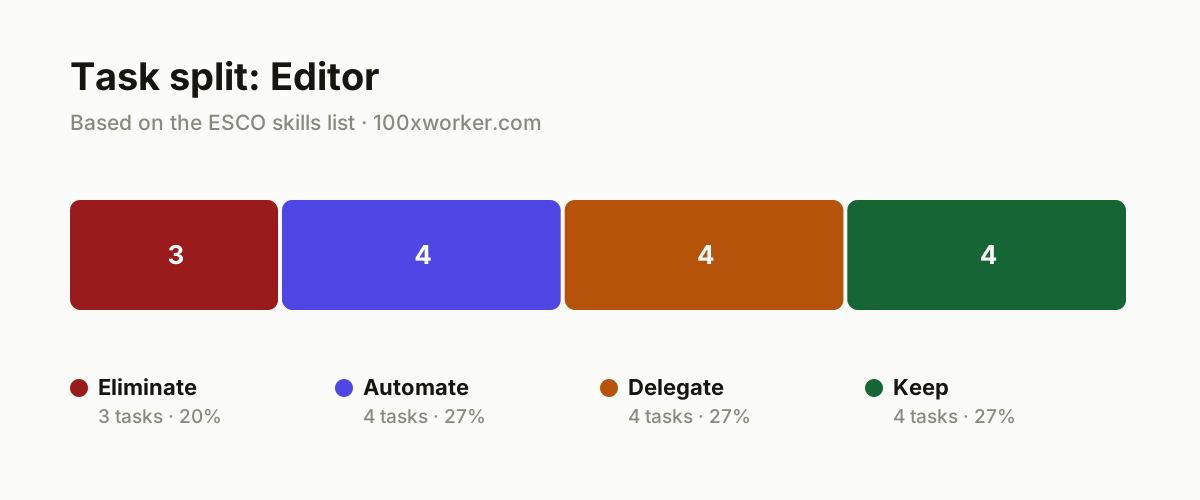
| Task | Bucket | Why |
|---|---|---|
| Typing out interviews or meetings word for word | eliminate | Transcription is a solved problem. Spending editorial time on it is wasted time. |
| Manually searching old issues or archives for source material | eliminate | Searching an archive is a job for a system, not an editorial task. |
| Manually reformatting layout between web and print versions | eliminate | Format conversion is mechanical work with no editorial value. |
| Generating metadata and SEO tags for online publications | automate | Regular, pattern-based work that an agent repeats without errors. |
| Building the editorial calendar and publication schedule | automate | Given deadlines and audience data, a system can build a first-draft schedule. |
| Summarizing competitive analysis of the publishing market | automate | Gathering and structuring market research is agent work, not editorial work. |
| Scheduling social media posts according to the content strategy | automate | Repeatable execution of an already-set strategy is not a core editorial task. |
| Drafting articles and newsletters from a briefing | delegate | AI produces a usable first draft. You rewrite for tone and check the facts. |
| Drafting the marketing plan and content strategy | delegate | A first strategy document comes together faster. The choices still stay with you. |
| Summarizing budgets and project status for stakeholders | delegate | A system can pull the numbers together. It cannot make the call on corrective action. |
| Translating technical documents into readable summaries for the audience | delegate | AI produces the simplified version. You verify it is accurate and complete. |
| Final edit and legal review of copyright issues | keep | Liability and nuance in rights questions require human judgment. (Your edge: You carry the responsibility, not an algorithm.) |
| Leading the editorial team | keep | Motivating, coaching, and evaluating staff is relational work. (Your edge: You build trust yourself, not through a prompt.) |
| Managing relationships with publishers, freelancers, and market partners | keep | Negotiating and networking require context and a feel for people. (Your edge: Human relationships remain the basis of every deal.) |
| Making the final publication call and protecting brand identity | keep | Taste, timing, and brand instinct are not rules a model can infer. (Your edge: You decide what the organization is allowed to say, not the model.) |
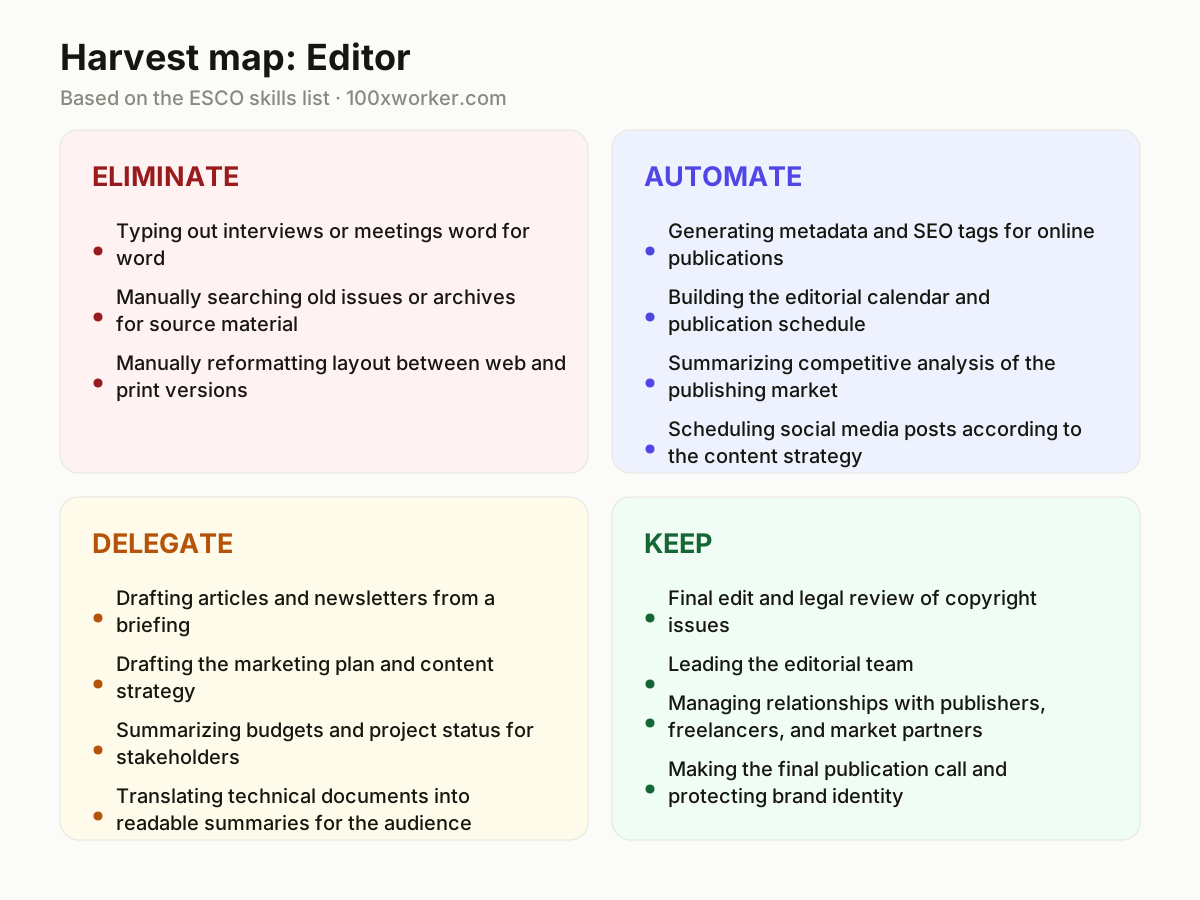
Which editor tasks does AI take over first?
AI moves fastest into the tasks that were mechanical to begin with: transcribing interviews, searching archives for source material, and reformatting content between web and print. These have no editorial judgment attached, so there is little reason for a person to keep doing them. Next come repeatable production tasks like generating SEO metadata, building a first-pass editorial calendar, summarizing competitor activity in the publishing market, and scheduling social posts against an already-approved content strategy. None of this eliminates the editor role. It removes the parts of the job that were never really about editing.
Will AI replace editors?
Not as a full occupation. Microsoft Research scores editors at 36.7% AI applicability, meaning a little over a third of the work activities in the role show up in real AI conversations as tasks the model can plausibly help with or complete. That is a meaningful share, but it sits well below translators (49%) and well above roles like nursing (12%). Anthropic's Economic Index shows a similar pattern: a mix of automation-like use, where AI does the task, and augmentation-like use, where AI helps a person do it. The realistic outcome is fewer routine tasks per editor and more responsibility concentrated in judgment, leadership, and final sign-off.
How do you become the AI-savvy person on your editorial team?
Start by being the one who tests tools before rolling them out, not the one who resists them. Build a short internal playbook: which AI tool for first drafts, which for research summaries, which prompts actually produce usable output for your publication's voice. Run a monthly review of what AI got wrong so the team learns the tool's blind spots together. Volunteer to train freelancers and junior editors on where AI output needs the heaviest rewrite. That combination of hands-on testing and honest documentation is what makes one person the go-to on a team, more than any certificate.
What can you do this month as an editor?
Pick one recurring task from your own list, ideally something in the eliminate or automate bucket, and move it off your plate this month. Try AI-drafted metadata on your next five online pieces and check the results against your usual manual version. Run one AI-drafted article or newsletter through your normal edit process and time how long the rewrite takes compared to writing from scratch. Use the difference to decide which delegate tasks are worth keeping in your workflow and which still need a human first draft.
Generative AI applies to 36.7% of an editor's work activities, based on analysis of 200,000 real Copilot conversations.
Microsoft Research, Working with AI: Measuring the Applicability of Generative AI to Occupations (2025)
Become the AI person on your team
Run a task audit on your own week
List every task you did last week and sort it into eliminate, automate, delegate, or keep. Most editors are surprised by how much of their week sits in the first two buckets.
Pilot one AI tool on one recurring task
Pick a single task, like drafting SEO metadata or summarizing a competitor's publication schedule, and run it through an AI tool for a month before deciding whether to keep the process.
Document what AI gets wrong for your publication
Keep a running list of errors AI introduces in tone, facts, or context specific to your outlet. This becomes the training material for your team and the case for where humans stay essential.
Want this for your actual task list?
The free scan on the homepage builds your personal task map in 30 seconds, based on your role and industry.
Run the free task scanTools for this work
| Tool | For which tasks | The sober take |
|---|---|---|
| ChatGPT or Claude | Drafting articles, newsletters, and technical summaries from a briefing | Useful for a fast first draft, not for a publishable final version. |
| Otter.ai | Transcribing interviews and editorial meetings | Transcription is largely solved, so this replaces manual typing outright. |
| Grammarly or similar AI-assisted editing tools | Copyedit passes and style consistency checks | Catches mechanical errors, but house style and voice still need a human read. |
| Clearscope or Surfer | SEO tags, metadata, and content-market research | Good at pattern-matching keywords, not at judging what the audience actually wants. |
Prompts to try today
First-draft article from a briefing
Competitive market scan
Budget and project status summary for stakeholders
Related jobs
Frequently asked questions
What percentage of an editor's job can AI handle?
Microsoft Research's analysis of 200,000 real Copilot conversations scores editors at 36.7% AI applicability. That is the share of work activities where generative AI shows up as plausibly useful, not the share of jobs that disappear. For comparison, translators score higher at 49% and nurses much lower at 12%. The number describes task overlap with AI capability, not job loss.
Which editor tasks should I stop doing myself?
Start with transcription, manual archive searches, and reformatting content between web and print. These are mechanical tasks with no editorial judgment involved, and tools handle them reliably. Moving them off your list frees time for drafting review, team leadership, and the final publication decisions that still require a human.
Can AI write a full newsletter or article on its own?
AI can produce a usable first draft from a clear briefing, but it needs a human pass for tone, factual accuracy, and fit with the publication's voice. Anthropic's Economic Index shows AI use in writing tasks splits between full automation and human-assisted augmentation, and editorial work tends to fall into the second category, where the model helps rather than replaces.
How is the editor role classified for AI-impact research?
The European Commission's ESCO taxonomy lists this role (as publications coordinator, ESCO code 1349.19) among 3,039 occupations described with skills across 28 languages. Microsoft Research's applicability scoring uses a comparable US occupational category (Editors) rather than ESCO codes directly, so the 36.7% figure is a close match to this role rather than an exact one-to-one mapping.
Sources
- Microsoft Research, Working with AI: Measuring the Applicability of Generative AI to Occupations (2025)
- Anthropic Economic Index
- Eurostat, isoc_ai_iaiu (2025)
- ESCO, European Commission
Hendrik De Winne, author of Becoming AI-Savvy, founder of VibeLab. Helps teams redesign their work with AI.
This article was drafted with AI assistance from public data sources and editorially reviewed.