100×worker · job analysis
Will AI Replace Community Managers?

Community management sits at the intersection of writing, customer service, and data work, which makes it a natural target for generative AI. Microsoft Research analyzed 200,000 real Copilot conversations and scored occupations on how much of their daily work AI can plausibly touch. For the marketing category closest to community management, that score lands at 35%, well below translators at 49% but far above nursing at 12%. That gap tells you something useful: AI is applicable here, but it is not close to total.
Anthropic's Economic Index adds a second layer to this picture. Its Economic Index tracks whether AI use in a given task looks more like automation, meaning AI does the task with little human input, or more like augmentation, meaning a person and the model work through it together. Community management leans toward augmentation for judgment calls and toward automation for repetitive monitoring and formatting work. This article sorts the job into four buckets: tasks to eliminate, automate, delegate, and keep, so you can see exactly where AI changes your day and where it does not.
A community manager runs a brand's online conversations and uses AI to speed up monitoring, drafting, and reporting.
The task split: what AI takes over and what stays yours
The eliminate/automate/delegate/keep framework sorts community management work by how much human judgment each task actually needs. Eliminate covers manual busywork a tool can now do outright. Automate covers tasks where an AI system can run with light oversight. Delegate covers tasks where AI produces a draft that you still check and finish. Keep covers judgment calls, relationships, and brand decisions that stay with you regardless of how good the tools get.
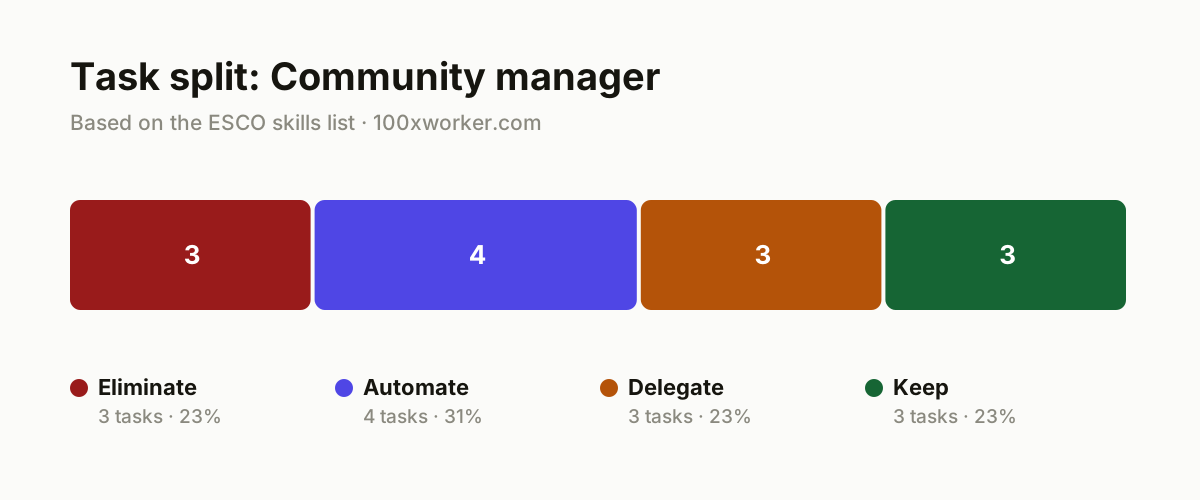
| Task | Bucket | Why |
|---|---|---|
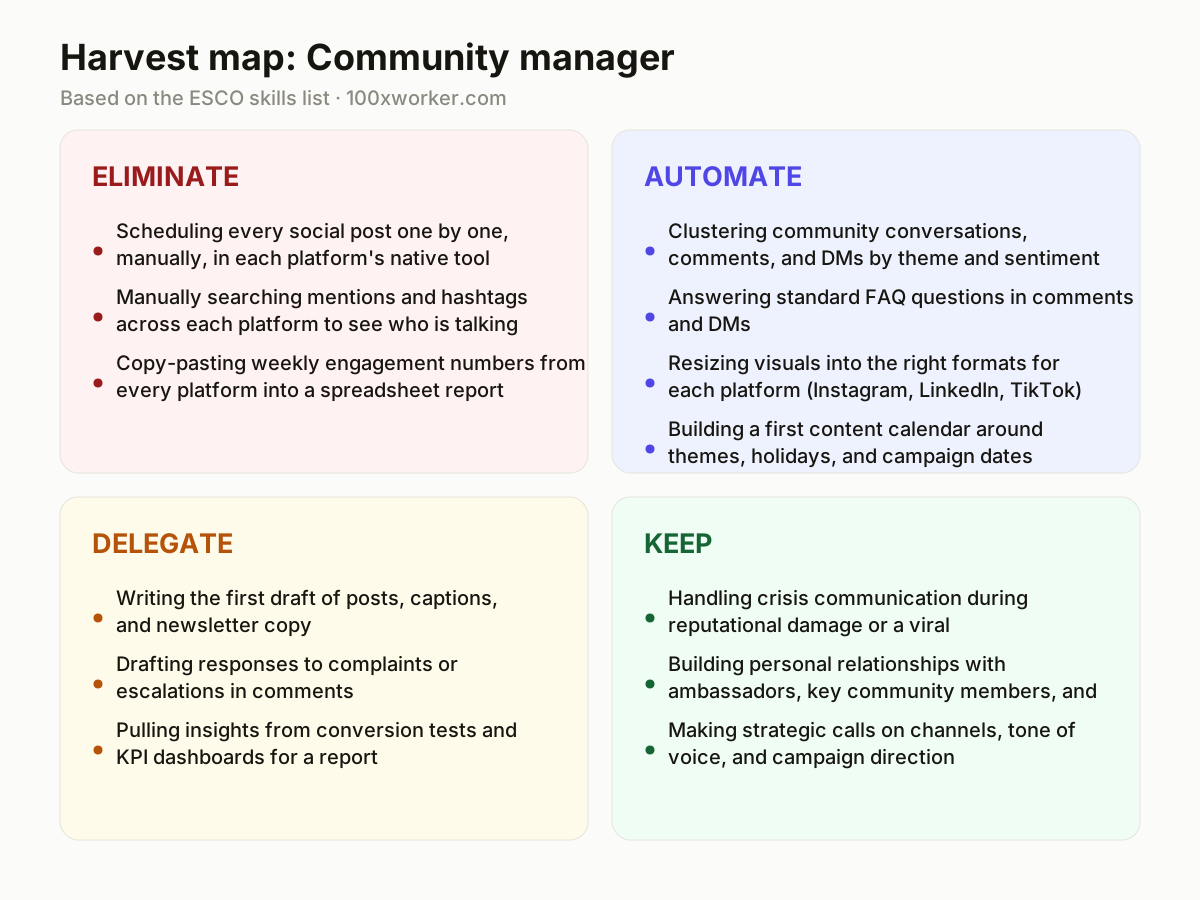
| Scheduling every social post one by one, manually, in each platform's native tool | eliminate | A scheduler or AI agent does this faster and without errors, so you never have to click through platforms manually. |
| Manually searching mentions and hashtags across each platform to see who is talking about the brand | eliminate | Monitoring agents scan every channel around the clock and flag only what actually matters to your brand. |
| Copy-pasting weekly engagement numbers from every platform into a spreadsheet report | eliminate | Dashboards pull engagement numbers automatically, so nobody retypes figures from each platform into a spreadsheet by hand. |
| Clustering community conversations, comments, and DMs by theme and sentiment | automate | AI reads thousands of comments and DMs and groups them by theme, so you only review the clusters. |
| Answering standard FAQ questions in comments and DMs | automate | A trained chatbot answers repeat questions in comments and DMs around the clock, with no wait time for followers. |
| Resizing visuals into the right formats for each platform (Instagram, LinkedIn, TikTok) | automate | Image tools resize one asset automatically into every format each platform requires, from Instagram to LinkedIn to TikTok. |
| Building a first content calendar around themes, holidays, and campaign dates | automate | Agents generate a full posting schedule from themes, holidays and campaign dates, and you adjust and refine it after. |
| Writing the first draft of posts, captions, and newsletter copy | delegate | AI produces a usable first draft, and you rewrite the tone and check every fact before it goes live. |
| Drafting responses to complaints or escalations in comments | delegate | AI drafts a polite first reply to a complaint or escalation, and you decide if tone and content are right. |
| Pulling insights from conversion tests and KPI dashboards for a report | delegate | AI summarizes the numbers from conversion tests and KPI dashboards, and you decide what they mean for strategy. |
| Handling crisis communication during reputational damage or a viral misunderstanding | keep | Any misstep in tone or timing costs credibility fast, and this calls for judgment under real pressure. (Your edge: Personal accountability and tact when it matters most.) |
| Building personal relationships with ambassadors, key community members, and influencers | keep | Trust builds through recognition and genuine attention over time, something a scripted reply cannot fake. (Your edge: A community spots real presence and sincerity instantly.) |
| Making strategic calls on channels, tone of voice, and campaign direction | keep | These choices define the brand itself, and no AI agent holds a mandate over brand identity. (Your edge: Final responsibility for brand and direction stays with you.) |
Which tasks does AI take over from community managers?
AI takes over the repetitive, high-volume parts of the job first: scheduling posts, scanning mentions and hashtags across platforms, resizing images for each channel, and pulling weekly engagement numbers into a report. It also handles a lot of the middle layer, clustering comments by theme, drafting FAQ replies, and building a first-pass content calendar. What it does not take over is anything that requires reading a room, defusing a crisis, or deciding what the brand actually stands for. Those tasks stay with the human because they require accountability and context that a model does not hold.
Will AI replace community managers?
Not as a full job, no. Microsoft Research scored the closest marketing occupation category at 35% AI applicability across its work activities, which means most of the job still depends on a person. Anthropic's Economic Index shows a similar pattern across roles: AI use splits between automation of routine tasks and augmentation, where a person still steers the work. Community management leans toward augmentation for anything involving reputation, tone, or relationships. The realistic outcome is a smaller task list per person, not fewer community managers overall, since routine monitoring and reporting get automated while judgment work grows in relative importance.
What can a community manager do this month to start using AI?
Start small and concrete. Pick one recurring task, such as weekly reporting or FAQ replies, and set up an AI tool to handle a first draft or full automation of it. Feed the model your brand's tone-of-voice guide and past captions so its drafts sound like you, not generic marketing copy. Test one social listening or monitoring tool against your current manual search process for two weeks and compare the time saved. Keep a running log of what AI got wrong, since that log becomes your case for what still needs human review.
How do you become the AI person on your marketing team as a community manager?
Document which of your tasks AI already handles well and which ones it consistently gets wrong, then share that breakdown with your team as a working reference rather than a one-off memo. Volunteer to pilot one new tool per quarter, whether that is a listening platform, a chatbot for DMs, or a drafting assistant, and report back with real numbers on time saved and error rate. Offer to write the prompts and guardrails other team members use, since community managers already know brand voice and audience nuance better than most. That combination of tool fluency and brand judgment is what makes you the go-to person, not just AI usage on its own.
Across the marketing category closest to community management, generative AI is already applicable to more than a third of daily work activities.
Microsoft Research, Working with AI (2025)
Become the AI person on your team
Build a prompt library for your brand voice
Collect your five best captions, three past crisis responses, and your tone-of-voice doc into a reference file. Turn it into a standing prompt other people on the team can reuse when they draft copy with AI.
Run a monthly AI-versus-manual audit
Once a month, compare AI-drafted reports or replies against what a human would have written. Track error rate and time saved, and bring that data to your manager instead of a vague opinion.
Own the escalation rules for chatbots
If your team deploys an AI chatbot for DMs or comments, write the rules for when it hands off to a human. Community managers understand tone risk better than most IT teams do.
Want this for your actual task list?
The free scan on the homepage builds your personal task map in 30 seconds, based on your role and industry.
Run the free task scanTools for this work
| Tool | For which tasks | The sober take |
|---|---|---|
| Hootsuite or Sprout Social | eliminate scheduling, automate reporting and basic listening | Useful for volume, but check AI-suggested replies before they go out. |
| Brandwatch or Talkwalker | automate mention and hashtag monitoring, cluster sentiment | Good at scale, weak at picking up sarcasm or local slang. |
| ChatGPT or Claude | delegate first drafts of captions, FAQ replies, and complaint responses | Fast for a first draft, always needs a fact and tone check. |
| Zendesk or Intercom AI | automate repeat FAQ answers in comments and DMs | Fine for known questions, set clear rules for when it escalates. |
Prompts to try today
First-draft caption set
Cluster comments by theme and sentiment
Draft a complaint response
Related jobs
Frequently asked questions
Will AI replace community managers?
No, not as a full role. Microsoft Research scored the nearest marketing occupation category at 35% AI applicability, meaning most of the job still needs a person. AI removes scheduling, basic monitoring, and reporting work, but crisis response, relationship building, and brand strategy stay with humans. Expect the job to shrink in routine tasks and grow in judgment-heavy ones, not to disappear.
What AI tools should a community manager learn first?
Start with a social listening tool (Brandwatch or Talkwalker) to automate mention tracking, a scheduler with AI features (Hootsuite or Sprout Social) to eliminate manual posting, and a general model like ChatGPT or Claude for first drafts of captions and replies. Learn to write clear prompts with your brand's tone-of-voice guide attached, since generic prompts produce generic output that still needs heavy editing.
How is community management different from online marketing when it comes to AI?
Both roles sit in the same ESCO skills cluster, covering content strategy, social media, and customer engagement. Online marketing leans more toward campaign planning, budgets, and conversion analysis, areas where AI drafts and dashboards help heavily. Community management leans more toward live conversation and reputation management, where timing and tone matter in the moment, which keeps more of the daily work in human hands.
Does using AI as a community manager put my job at risk?
The data suggests the opposite for people who use it well. Anthropic's Economic Index shows AI use splitting between automation of routine work and augmentation, where a person stays in the loop on judgment calls. Community managers who document how they use AI for monitoring and drafting, and who keep ownership of crisis response and relationships, become harder to replace, not easier.
Sources
- Microsoft Research, Working with AI: Measuring the Applicability of Generative AI to Occupations (2025)
- Anthropic Economic Index
- Eurostat, Individuals using generative AI (isoc_ai_iaiu)
- ESCO, European Commission taxonomy of occupations and skills
Hendrik De Winne, author of Becoming AI-Savvy, founder of VibeLab. Helps teams redesign their work with AI.
This article was drafted with AI assistance from public data sources and editorially reviewed.