100×worker · job analysis
Will AI Replace Care Workers?
If you work as a care worker, the question isn't whether AI exists in healthcare. It's whether it takes your job. Microsoft Research analyzed 200,000 real Copilot conversations and scored occupations on how much of their actual work generative AI can meaningfully touch. Nursing assistants, the closest US occupational match to a care worker, scored 2.9%, one of the lowest scores in the entire study. Translators topped the list at 49%. Registered nurses scored 12%.
That low score has a simple explanation: most of your day is physical, present-tense, and human. Washing, dressing, moving patients, watching for a change in condition, calming a frightened family member. None of that runs through a chat window. What does run through a chat window is the paperwork around it: handover notes, education leaflets, audit documentation, scheduling. Across the EU, 32.7% of people aged 16 to 74 had already used generative AI in the three months before being surveyed in 2025, according to Eurostat. Some of that use is already happening in healthcare settings, officially or not.
The useful way to plan for this isn't to ask 'will AI take my job' but to break the job into tasks and ask which bucket each task falls into: eliminate, automate, delegate, or keep. That's what the rest of this article does, using the European Commission's ESCO taxonomy (code 5321.1, healthcare assistant) as the task reference.
A care worker supports registered nurses with hands-on care, observation, and basic support for patients, under supervision.
The task split: what AI takes over and what stays yours
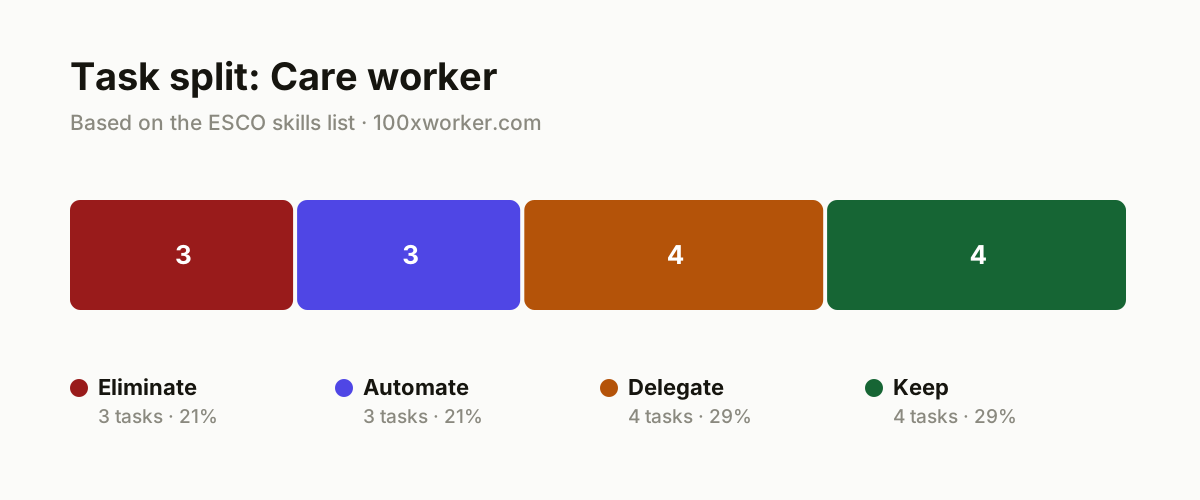
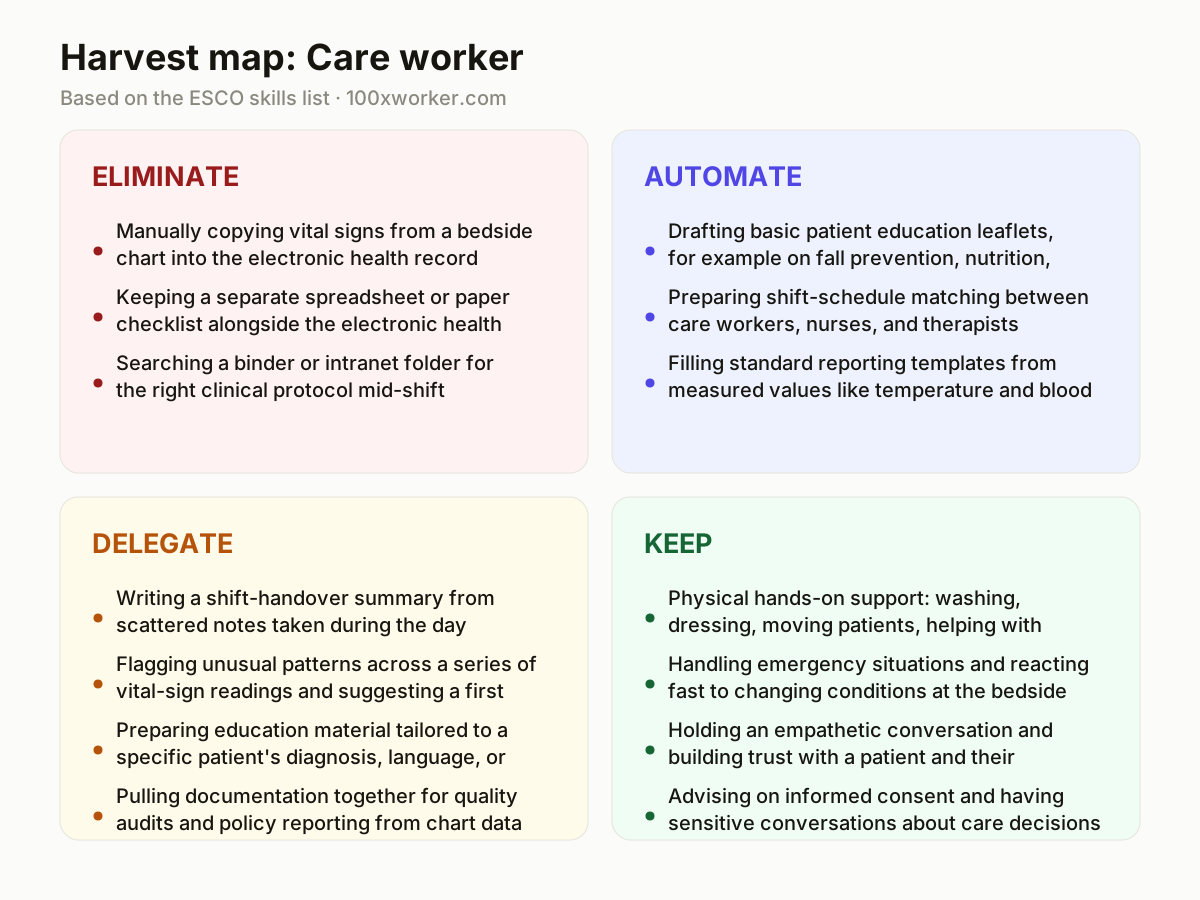
Not every task in a care worker's shift responds to AI the same way. Some tasks disappear because connected systems already do them better (eliminate). Some get fully handled by a tool with light human checking (automate). Some stay yours to decide but AI drafts the first version (delegate). And some stay entirely human because they require touch, presence, or judgment tied to a specific relationship (keep). Anthropic's Economic Index, which classifies large volumes of AI conversations against standard occupational task lists, finds a similar split in real use: some AI use finishes a task end-to-end (closer to automate), while more of it assists a person who stays in control (closer to delegate). That split maps directly onto how care work is changing.
| Task | Bucket | Why |
|---|---|---|
| Manually copying vital signs from a bedside chart into the electronic health record | eliminate | Connected devices and sensors already send readings straight into the record; re-typing them adds no value. |
| Keeping a separate spreadsheet or paper checklist alongside the electronic health record for shift handover | eliminate | One connected system shows everyone the same data; a second, shadow list is redundant admin work. |
| Searching a binder or intranet folder for the right clinical protocol mid-shift | eliminate | A searchable knowledge assistant surfaces the right protocol instantly; walking and flipping pages just costs time. |
| Drafting basic patient education leaflets, for example on fall prevention, nutrition, or wound care | automate | Generative AI produces a correct first draft at the right reading level, ready after a quick check. |
| Preparing shift-schedule matching between care workers, nurses, and therapists | automate | Scheduling tools combine availability, leave, and care load faster and more consistently than a spreadsheet. |
| Filling standard reporting templates from measured values like temperature and blood pressure | automate | A template-filling tool turns raw readings into a readable report without anyone re-typing numbers. |
| Writing a shift-handover summary from scattered notes taken during the day | delegate | AI condenses loose notes into a draft handover; you check sequence and clinical accuracy. |
| Flagging unusual patterns across a series of vital-sign readings and suggesting a first risk read | delegate | The system highlights trends in the numbers; you judge whether the trend matters clinically. |
| Preparing education material tailored to a specific patient's diagnosis, language, or family situation | delegate | AI drafts content matched to diagnosis and language; you adjust tone for the actual conversation. |
| Pulling documentation together for quality audits and policy reporting from chart data | delegate | AI extracts figures and required fields from the record; you sign off and add context. |
| Physical hands-on support: washing, dressing, moving patients, helping with meals | keep | This is bodily care that requires touch and physical presence; no AI system can perform it. (Your edge: Touch and physical presence are not replaceable.) |
| Handling emergency situations and reacting fast to changing conditions at the bedside | keep | Acute situations demand immediate physical action on the spot; no system intervenes itself. (Your edge: Speed and physical presence on site cannot be outsourced.) |
| Holding an empathetic conversation and building trust with a patient and their family | keep | Trust grows between people over time; a chatbot can imitate conversation but not build a relationship. (Your edge: Human contact and trust don't form through a screen.) |
| Advising on informed consent and having sensitive conversations about care decisions | keep | Moral judgment and personal accountability sit with a person who actually knows the patient. (Your edge: Responsibility and personal judgment stay with you.) |
Will AI replace care workers?
No. Care work is built on hands-on tasks: washing, dressing, moving patients, feeding, and reacting to emergencies at the bedside. Microsoft Research analyzed 200,000 real Copilot conversations and gave nursing assistants, the closest US occupational match, an AI applicability score of just 2.9%, one of the lowest scores measured, far below translators at 49% and below registered nurses at 12%. Older estimates such as the 2013 Frey and Osborne automation-risk study, done before large language models existed, are no longer a reliable guide to today's technology. AI will reshape the paperwork and communication side of the job, not the physical caregiving core.
Which care worker tasks will AI take over first?
Paperwork goes first. Manually copying vital signs into the electronic health record, keeping a separate spreadsheet for handover, and hunting through binders or an intranet for the right protocol during a shift are the first tasks to disappear or shift to automated systems. Connected devices already send readings straight into the record, and a searchable assistant surfaces a protocol faster than any manual search. Next come tasks AI can draft but a human must still check: education leaflets, shift-handover summaries, and quality-audit paperwork pulled from chart data. None of this touches the physical care itself.
What can you do this month to start using AI as a care worker?
Start small, inside tools your employer already allows. Pick one repeated writing task, such as a fall-prevention leaflet, and draft it with a generative AI tool, then edit it for accuracy and tone before use. Try turning a page of loose shift notes into a structured handover summary and compare the result against what you would have written yourself. Keep a short list of prompts that worked so colleagues can reuse them. Never paste patient names or identifying details into a public AI tool; use only your organization's approved, patient-data-compliant system.
How do you become the AI-savvy person on your care team?
Become the person who tests templates before the team adopts them. Volunteer to pilot AI-drafted education materials or handover summaries for a week, note where the AI gets clinical details wrong, and bring a short, concrete fix list to a team meeting. Build a small library of checked prompts for common documents, like fall-risk leaflets or audit summaries, that colleagues can reuse. Share what studies like Microsoft Research's actually measure, mostly text and communication tasks, so colleagues stop assuming AI puts the whole job at risk.
Across the occupations we measured, translators show the highest AI applicability at 49 percent, while nursing assistants sit near the bottom at 2.9 percent.
Microsoft Research, Working with AI: Measuring the Applicability of Generative AI to Occupations (2025)
Become the AI person on your team
Pilot one document type
Choose a single recurring document, such as a fall-prevention leaflet, and run it through an AI tool for two weeks. Track how much editing each draft needs and share the result with your team lead.
Build a shared prompt library
Collect the prompts that produced usable first drafts, for handover summaries or education materials, in one shared note. Colleagues reuse them instead of starting from a blank page every shift.
Log where AI gets clinical details wrong
Keep a short list of AI mistakes, wrong dosage phrasing, outdated guideline references, and raise it in team meetings. This builds real trust in the tool instead of blind trust or blanket rejection.
Map your own four buckets
Sketch a quick eliminate, automate, delegate, keep map for your unit's actual tasks. Use it to show worried colleagues exactly what is changing and what is not.
Want this for your actual task list?
The free scan on the homepage builds your personal task map in 30 seconds, based on your role and industry.
Run the free task scanTools for this work
| Tool | For which tasks | The sober take |
|---|---|---|
| General-purpose assistant (ChatGPT, Microsoft Copilot) | drafting education leaflets, handover summaries, and audit text (automate/delegate buckets) | Fine for a first draft; never paste identifiable patient data into a public consumer version. |
| EHR-integrated documentation tools | turning bedside notes or spoken observations into structured chart entries (automate bucket) | Only useful if your facility has actually licensed and validated one for clinical use. |
| AI-assisted scheduling software | roster coordination between care workers, nurses, and therapists (automate bucket) | Speeds up matching availability to care load, but someone still approves the final roster. |
| Searchable protocol assistant on the intranet | finding the right clinical protocol mid-shift (eliminate bucket, replacing manual folder search) | It replaces the search, not the judgment about which protocol actually applies. |
Prompts to try today
Draft a shift handover summary
Write a patient education leaflet
Summarize chart data for a quality audit
Related jobs
Frequently asked questions
Is care work at high risk of AI automation?
According to Microsoft Research's analysis of real Copilot conversations, nursing assistants, the closest US category to care workers, have an AI applicability score of just 2.9%, one of the lowest of all occupations studied. Generative AI is directly useful for only a small share of the actual work activities in the job. Older, higher automation-risk numbers you may see quoted online usually come from a 2013 Oxford study (Frey and Osborne) done before modern generative AI existed, and should not be treated as a current estimate.
Which parts of my job will AI never take over?
Physical hands-on care (washing, dressing, moving patients, helping with meals), reacting to emergencies at the bedside, and building trust with patients and families through conversation stay with you. These require physical presence, split-second judgment, or a human relationship a chatbot cannot replicate. Advising patients and families on sensitive care decisions and informed consent also stays human, since it involves moral judgment and personal accountability tied to a specific person, not a system.
Do care workers actually use AI tools today?
Adoption is rising across the general population. Eurostat reports that 32.7% of people aged 16 to 74 across the EU used generative AI in the three months before being surveyed in 2025. Healthcare-specific adoption figures for care workers are not broken out in the sources used here, so treat any specific claim like 'X% of nurses use AI' with caution until it cites a named study.
How is 'care worker' officially classified, and does that matter for AI planning?
The European Commission's ESCO taxonomy lists 'healthcare assistant' under code 5321.1, within the Health Care Assistants group, with a defined list of skills such as following clinical guidelines, monitoring basic patient signs, and supporting nurses. Planning around AI works best at this task level, not at the job-title level: skills like computer literacy or documentation shift quickly, while hands-on patient support does not shift at all.
Sources
- Microsoft Research, Working with AI: Measuring the Applicability of Generative AI to Occupations (2025)
- Anthropic Economic Index
- Eurostat, isoc_ai_iaiu (generative AI use, 2025)
- ESCO, European Commission
Hendrik De Winne, author of Becoming AI-Savvy, founder of VibeLab. Helps teams redesign their work with AI.
This article was drafted with AI assistance from public data sources and editorially reviewed.